 Adedokun Waliyu
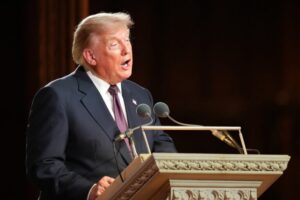
 U.S. President Donald Trump has signed a new executive order aimed at reshaping college sports in the United States, particularly in response to growing financial compensation for student-athletes.
Key Changes in the Order
The directive targets the National Collegiate Athletic Association (NCAA), asking it to introduce stricter rules, including:
Eligibility limit: Athletes can compete for a maximum of five years
Transfer rule: Students can transfer only once without losing a season
Enforcement: Schools that violate these rules risk losing federal funding
These changes are expected to take effect from August 1.
Why This Order Was Issued
Trump argued that recent developments—especially payments tied to athletes’ Name, Image, and Likeness (NIL)—have led to:
An “out-of-control financial arms race”
Increased financial pressure on universities
Potential neglect of smaller, non-revenue sports
He emphasized that sports like athletics, swimming, and gymnastics have historically served as feeder systems for U.S. Olympic teams, and should be protected.
Background: What Changed in College Sports
For decades, the NCAA prohibited athletes from earning money. However, after a landmark 2021 ruling by the Supreme Court of the United States, student-athletes were allowed to profit from their personal brand.
This led to major shifts:
Star players in football and basketball began earning significant income
Schools faced increased competition to attract top talent
Financial imbalance widened between big and small sports programs
Additional Measures
The order also:
Calls for a ban on “improper” financial deals
Urges Congress to pass broader legislation to regulate college athletics
Follows an earlier directive aimed at limiting third-party recruitment payments
Context: Timing and Impact
The announcement comes during the climax of the NCAA basketball tournaments, one of the biggest events in U.S. college sports.
If implemented fully, this policy could significantly reshape:
Athlete recruitment
Transfer dynamics
Financial structures in college athletics
It marks one of the strongest federal interventions yet in the evolving landscape of U.S. collegiate sports.