

 Adedokun Waliyu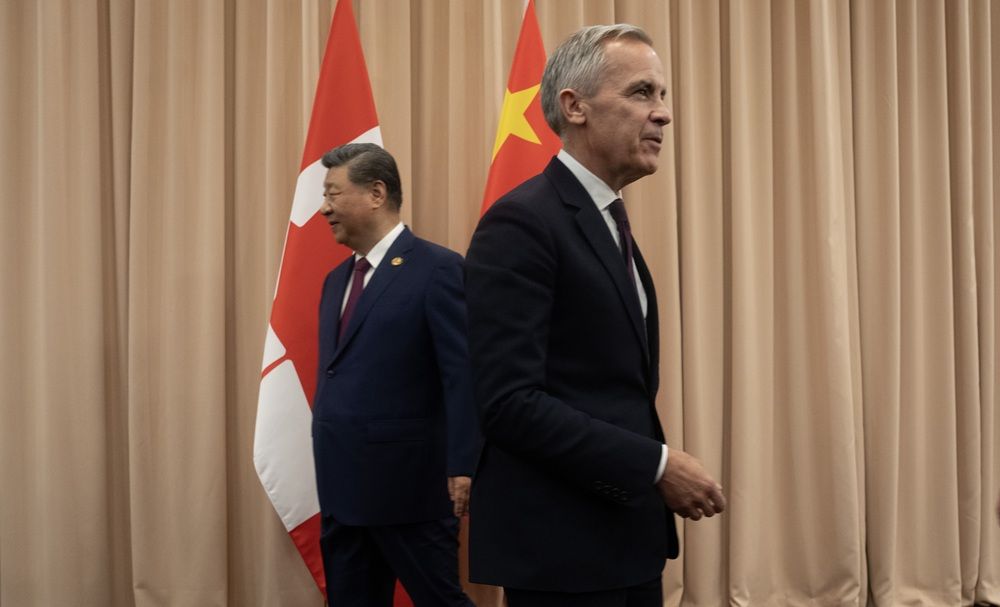
Canada’s attempt to reset relations with China should be taken with caution, observers urge.
Alan Kessel, a senior fellow at the Macdonald-Laurier Institute and a former Canadian diplomat, told the Toronto Sun that, with the United States proving an unreliable and unfriendly trade partner, it’s natural for Canada to look east — a move that comes with risk.
“It’s Canada hedging against the end of the ‘special relationship,’” he said. “There are concerns to watch out for — engagement can’t mean blindness.”
Beijing buys influence, not friendship
China’s leverage, Kessel said, always comes with strings attached — evidenced by China’s dubious relationships in Africa, which many have described as exploitive and quasi-colonial despite being described as “investments” in the region.
“Beijing doesn’t buy friendship. It buys influence,” Kessel said.
opening envelope
Your Midday Sun
Your noon-hour look at what’s happening in Toronto and beyond.
“The real test isn’t whether we talk to China, but whether we can still say no to China — Canada’s challenge is to trade with China without being traded by China.”
That reset began early Friday morning when Prime Minister Mark Carney met with Chinese President Xi Jinping on the margins of the APEC summer, accepting a future invitation for a state visit to Beijing.
Canada-Taiwan relations a concern
Canada’s overtures to China naturally draws questions to our country’s relationship with Taiwan, of which Canada doesn’t recognize as a sovereign state — thanks to Canada’s adherence to Beijing’s “One China” policy, a condition for diplomatic relations with the communist state.
“If Canada was living up to its values, it would actually have recognized Taiwan as a state,” Kessel said, indicating that Taiwan meets far more criteria for statehood that, for example, a Palestinian state.
“I would expect continuity in (Canada’s Taiwan) policy, but softer language, quiet cooperation with Taiwan, louder diplomacy with Beijing — we would, inevitably, as part of the quid pro quo reaffirm the One China Policy while quietly maintaining unofficial economic and academic ties with Taiwan.”
Unity among democracies essential, Taiwan’s ambassador says
Harry Tseng, Taiwan’s de facto ambassador to Canada, told the Toronto Sun Carney’s meeting with Xi — as well as plans to update Canada’s Indo-Pacific Strategy (IPS) — are signs that major police changes are afoot.
“For decades, the pressure that China puts on Taiwan has never relented, which leads to Taiwan’s high vigilance,” Tseng said.
“It may not be widely known to Canadians that, besides all the military intimidation, political and economic coercion, China is also waging disinformation warfare and grey-zone tactics to weaken Taiwan from within.”
Amid ongoing and drastic changes to the geopolitical landscape, Tseng said unity between democratic countries is essential.
“Taiwan is ready and willing to share its experiences in countering China’s aggression,” he said.