
 Adedokun Waliyu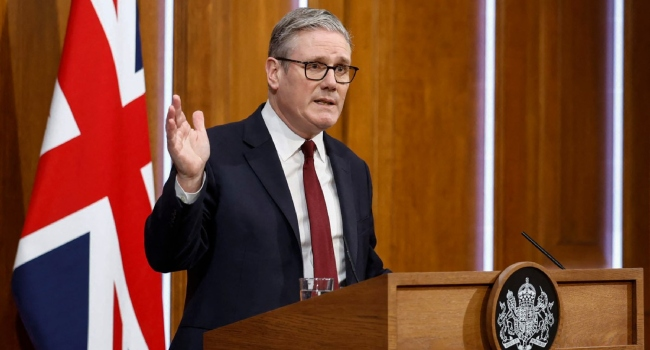
British Prime Minister Keir Starmer said his government is in discussions to take part in a major European Union loan for Ukraine, with the aim of allowing some of the funds to be spent on British weapons.
The European Union recently approved a 90-billion-euro loan to help Ukraine address a budget shortfall following the lifting of a veto by Hungary. Starmer confirmed that Britain is considering joining the initiative.
Under the arrangement, Ukraine would only repay the loan once Russia compensates for damages caused by its invasion. In the meantime, the EU would cover the interest costs through its budget.
EU countries previously agreed that Ukraine could allocate a significant portion of the loan toward purchasing weapons from allied countries such as Britain, provided those countries contribute financially by sharing some of the borrowing costs. The plan allows Ukraine to spend up to 60 billion euros on weapons to support its defence against Russia.
The agreement followed extensive negotiations, with some EU members pushing for stricter limits on purchases from outside the bloc, while others supported a more flexible approach that includes partners like Britain, Canada, and Norway.
Starmer said Britain’s participation would provide Ukraine with urgently needed military capability as the war continues, while also supporting jobs within the UK. He added that the move could strengthen ties between Britain and the EU.
In a joint statement after talks with European Commission President Ursula von der Leyen, both sides described the potential cooperation as a significant step forward in EU-UK defence industry relations.
Ukraine’s President Volodymyr Zelensky has been advocating for the flexibility to purchase weapons from a wide range of international partners.
Starmer said negotiations are beginning to ensure Ukraine receives the equipment it needs to defend itself, while also creating opportunities for British industry.
The discussions come amid growing calls for stronger UK-EU cooperation, especially as shifting policies from the United States raise uncertainty among traditional allies. Britain had previously attempted to join a separate 150-billion-euro European weapons programme, but those efforts stalled over concerns about the proposed entry cost.