 Adedokun Waliyu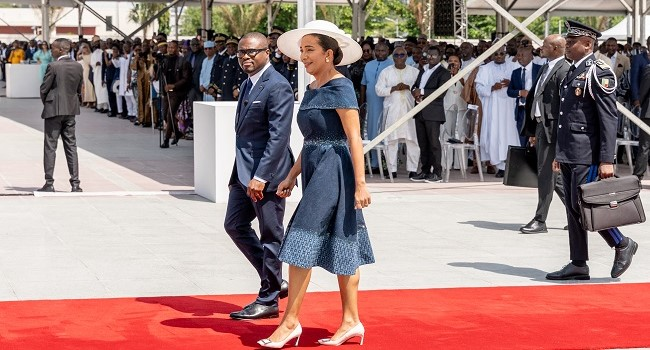
The former finance minister of Benin, Romuald Wadagni, officially became the country’s president on Sunday, taking over from his predecessor and former boss, Patrice Talon.
Wadagni, an economist known as a technocrat who represents continuity with Talon’s two mandates, was elected on April 12 with 94 percent of the votes.
His only opponent, Paul Hounkpe, was easily defeated, and Hounkpe’s party later joined forces with Wadagni’s party in parliament.
The main opposition party, the Democrats, could not participate in the election because of insufficient endorsements and internal disagreements.
“I will serve Benin with integrity, courage and commitment,” Wadagni said during his inauguration.
“I will serve with the constant knowledge that power is never a personal privilege,” he added.
Wadagni now leads a West African country that has experienced strong economic growth over the past decade, although a large wealth gap remains and insecurity continues in the northern region due to attacks blamed on jihadist groups.
The 49-year-old president will serve a seven-year term after a constitutional reform extended the presidential mandate from five years.
A president in Benin can serve a maximum of two terms.
During Wadagni’s ten years as finance minister, Benin improved its public finances and reduced its budget deficit by one-third to three percent of GDP.
He also promised to address the violence in northern Benin, mainly linked to Al-Qaeda’s Sahel branch, the Group for the Support of Islam and Muslims (JNIM).
“Benin will not give in to fear nor complacency. The government will be firm against all those who threaten our unity and security,” Wadagni said.
One of his major challenges will be improving relations with neighbouring Niger and Burkina Faso, both ruled by military juntas and battling Islamist militant groups.
Niger’s Prime Minister, Ali Mahaman Lamine Zeine, attended the inauguration ceremony, a move seen as a sign of improving relations between the countries.