 Adedokun Waliyu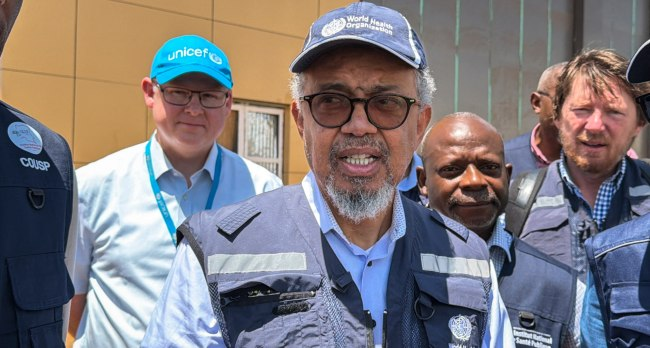
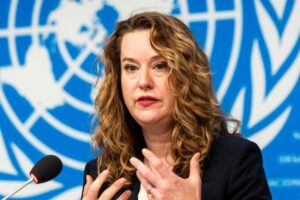
The head of the United Nations health agency, Tedros Adhanom Ghebreyesus, arrived in eastern Democratic Republic of Congo (DRC) on Saturday to assess the response to a severe Ebola outbreak affecting the region.
Speaking in Bunia, the capital of Ituri Province, the World Health Organization (WHO) Director-General said that while the international community was supporting the DRC government, community participation remained essential in controlling the outbreak.
According to him, the purpose of his visit was to engage with local communities, evaluate the ongoing response efforts, and identify any challenges that require additional support.
The highly contagious haemorrhagic disease has spread across three eastern provinces of the DRC and has also reached neighbouring Uganda, where nine confirmed cases, including one death, have been reported.
Since the outbreak was officially declared on May 15, there have been at least 1,077 suspected cases in the DRC, resulting in 246 deaths. Health officials believe the actual number of infections may be much higher because the virus was likely circulating before it was detected.
The WHO has warned that limited laboratory capacity in the conflict-ridden country makes it difficult to confirm cases quickly and accurately.
Conflict And Ebola
Uganda recently closed its border with the DRC and imposed a 21-day quarantine on all arrivals from the neighbouring country in an effort to prevent further spread of the disease.
In a positive development, the WHO announced that one patient recovered from Ebola and was discharged after recording two negative test results. It was the first confirmed recovery among patients infected during the current outbreak.
Ebola spreads through close contact with infected individuals and bodily fluids. Over the past 50 years, the disease has claimed more than 15,000 lives across Africa. The deadliest outbreak in the DRC occurred between 2018 and 2020, causing nearly 2,300 deaths from about 3,500 recorded cases.
The medical charity Doctors Without Borders (MSF) described the current outbreak as unprecedented, saying no previous Ebola epidemic had recorded such a high number of cases so soon after being declared. The organisation also warned that the number of medical personnel deployed to the affected areas remains inadequate.
The response effort is complicated by ongoing insecurity in eastern DRC. Ituri Province and the neighbouring North and South Kivu provinces have experienced decades of armed conflict involving various militant groups, including the Islamic State-affiliated Allied Democratic Forces (ADF).
Large portions of the region are also controlled by the M23 rebel group, which continues to fight government forces. As a result, millions of people have been displaced and now live in overcrowded camps with poor sanitation and hygiene conditions.
Nearly one million displaced people are currently in Ituri Province, raising concerns that the disease could spread rapidly through the camps.
One displaced resident, Dorcas Mapenzi, expressed fear about the situation, saying that if Ebola enters the camps, the consequences could be devastating because people are living in extremely crowded conditions.
Health experts note that there is currently no approved vaccine or specific treatment for the Bundibugyo strain of Ebola responsible for the present outbreak. However, the head of the Africa Centres for Disease Control and Prevention has expressed optimism that a vaccine could be available before the end of the year.