 Adedokun Waliyu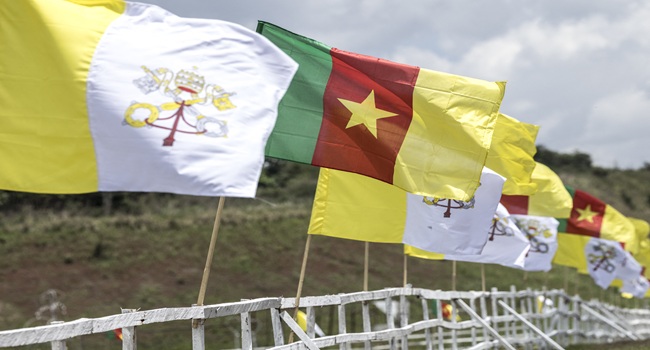
Pope Leo XIV departed Algeria for Cameroon on a four-day visit aimed at promoting peace in a region affected by a long-running separatist conflict.
Following his visit to Algeria — which was marked by two suicide attacks and a public disagreement with Donald Trump — the pope is expected in Cameroon, a predominantly French-speaking country led by Paul Biya since 1982.
In Cameroon, where a significant portion of the population is Catholic, the Church plays an important role in mediation and operates a wide network of schools, hospitals, and charities.
The pope is scheduled to meet President Biya, a move that has generated mixed reactions, with some clergy expressing concern that it could improve the president’s image following protests over his recent re-election.
During the visit, Pope Leo XIV will also meet with bishops, visit a Catholic orphanage, and engage with local communities.
He is set to travel under tight security to the Anglophone region, where English-speaking separatists have been fighting government forces since 2016. The conflict, which began after protests were suppressed, has led to widespread violence, including killings and kidnappings.
Separatist groups have announced a temporary three-day ceasefire to allow for the pope’s visit to Bamenda, the centre of the conflict.
The violence in the region has resulted in more than 6,000 deaths as of 2024, according to human rights organisations.
Local residents and church leaders have expressed hope that the pope’s presence will encourage peace. Archbishop Andrew Nkea of Bamenda said the visit could help soften positions and promote dialogue toward a peaceful resolution.
During his stay, the pope will celebrate Mass in Bamenda and later in Douala, where large crowds are expected to attend.
His broader African tour includes visits to Algeria, Cameroon, Angola, and Equatorial Guinea, marking his first major international trip since becoming pope.
While in Algeria, Pope Leo XIV visited sites linked to Saint Augustine and called for peaceful coexistence through dialogue and everyday acts of faith.
Despite criticism from US officials, including remarks from Trump and Vice President JD Vance, the pope reaffirmed his commitment to promoting peace, stating that he has no fear in speaking out on moral issues and advocating for reconciliation.