Hormuz Strait: Trump Threatens To ‘Bomb Oman’ If It Gets In Way Of Iran Deal
 Adedokun Waliyu
2 min read
Adedokun Waliyu
2 min read
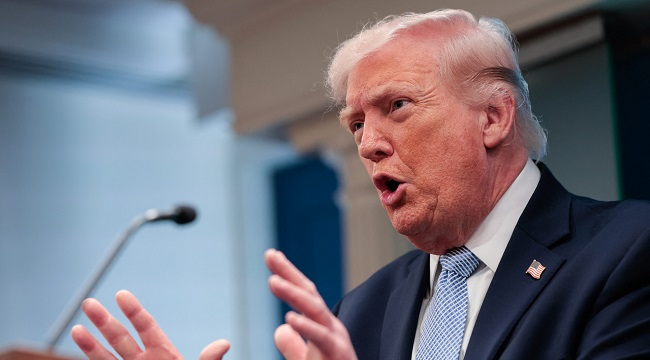
President Donald Trump on Monday threatened to bomb Oman if it “gets in the way” of a US deal with Iran concerning the Strait of Hormuz, while also calling on Iran to surrender.
Trump made the remarks in an interview with Fox News journalist Trey Yingst, referring to ongoing talks between Oman and Iran over control and navigation arrangements in the strategic waterway.
Iranian and Omani officials have been discussing future maritime navigation arrangements through the Strait of Hormuz for several weeks. Iran’s foreign ministry said the two countries were working on a joint declaration.
Trump has repeatedly insisted that the Strait of Hormuz is under US control, despite continued restrictions on maritime traffic. Tehran effectively closed the strategic waterway at the beginning of the Middle East war on February 28.
Trump also claimed on Friday that he could declare the Strait of Hormuz part of US territory. Iran responded that the strategically important waterway, which it has blockaded, would remain Iranian.
Before the US-Israeli war against Iran began, the Strait of Hormuz was regarded as an open international waterway. It is a major route for global energy shipments and the transportation of other commodities.
Iran has used its effective control of the strait as leverage against US-led efforts to destroy its military capabilities and force Tehran to abandon its controversial nuclear programme.
Iran borders the northern side of the Strait of Hormuz, while Oman lies to the south.
Trump also called on Iran to “put up the white flag of surrender,” according to Yingst’s account of the interview.
Despite the pressure surrounding the conflict, Trump said he was in no hurry to reach an agreement. His comments came amid growing opposition to the war in the United States ahead of the November midterm elections, in which Democrats are seeking to regain control of Congress.
Trump also said there was a direct back-channel between his administration and officials of Iran’s Revolutionary Guard.
He described the Iranian officials as “good poker players” but claimed they were facing severe difficulties as a result of the conflict.