
 Adedokun Waliyu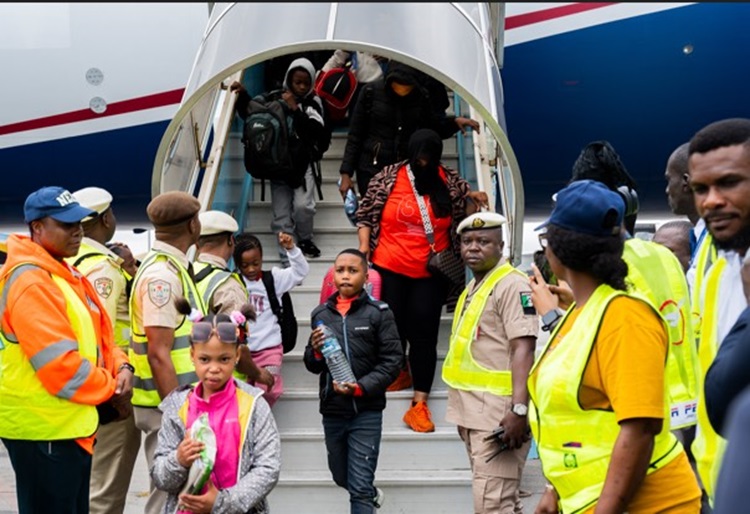
Nigeria and Ghana have jointly condemned the ongoing wave of anti-immigrant violence in South Africa and called for the issue of Afrophobia to be placed on the agenda of the next African Union (AU) summit.
South Africa has witnessed weeks of protests and unrest targeting undocumented immigrants, forcing tens of thousands of foreign nationals to flee the country.
According to figures compiled from African governments repatriating their citizens, nearly 150,000 people have left South Africa in recent weeks.
The position of the two countries followed discussions between the foreign ministers of Nigeria and Ghana on the sidelines of a meeting of the Economic Community of West African States (ECOWAS) in Liberia.
In a statement, the Nigerian government said both ministers strongly condemned all forms of xenophobia, Afrophobia, intolerance, and violence directed at fellow Africans.
The ministers also stressed the need for urgent, coordinated regional and continental action to address the root causes of the growing anti-immigrant tensions.
Nigeria has so far evacuated 1,490 of its citizens from South Africa, while Ghana has repatriated at least 926 nationals.
South Africa, Africa’s most industrialised economy, has traditionally attracted migrants from across the continent in search of better economic opportunities.
Ghana’s Foreign Minister, Samuel Okudzeto Ablakwa, and Nigeria’s Foreign Minister, Sola Enikanolaiye, agreed that the issue of Afrophobia should be formally discussed during the next African Union summit scheduled for early next year.
Earlier this year, Ghana requested that the African Union hold discussions on the increasing incidents of xenophobic attacks in South Africa, although it remains unclear whether the proposal was considered.
The diplomatic tensions surrounding the issue also led Ghana earlier this month to announce the postponement of a planned visit to Accra by South African President Cyril Ramaphosa.
Both countries reaffirmed their commitment to working through regional and continental institutions to promote the safety, dignity, and rights of African citizens living across the continent.