
 Adedokun Waliyu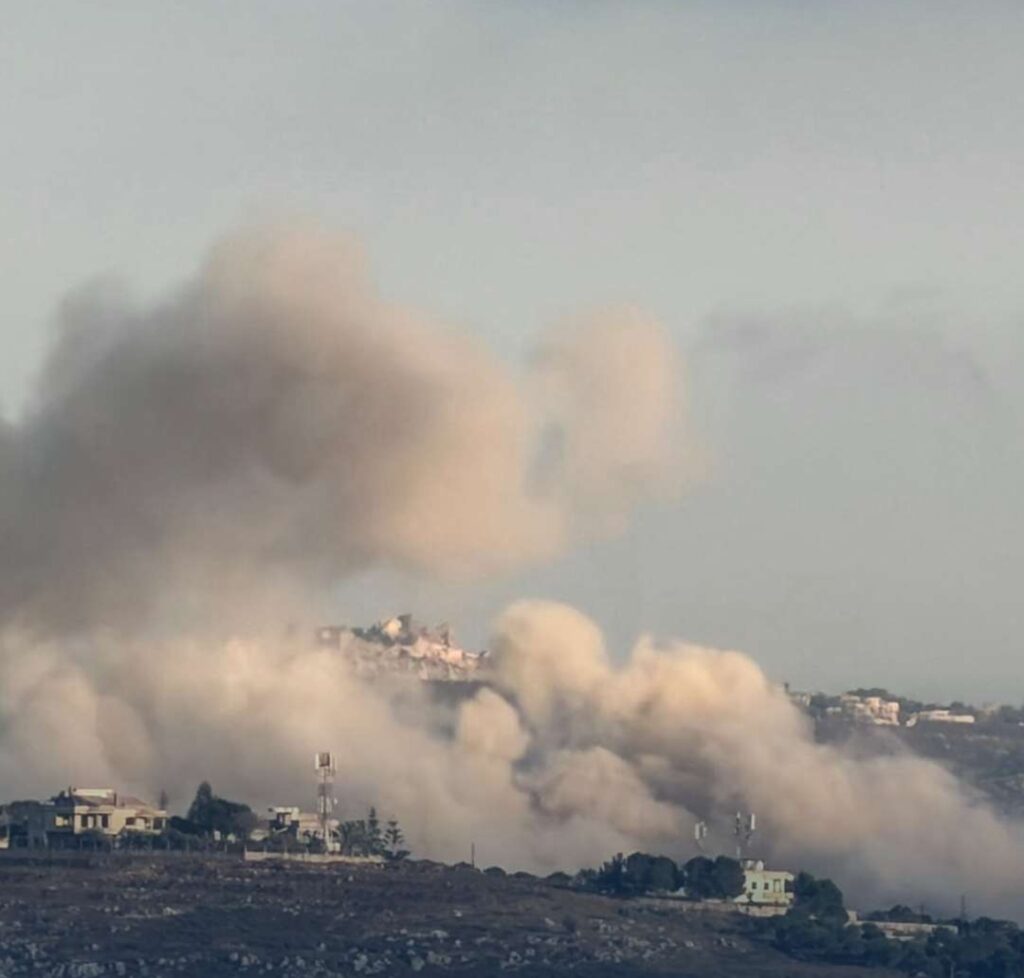
The United States and Iran exchanged drone and missile strikes on Friday, marking the most significant escalation in their conflict since both countries resumed open hostilities.
The renewed violence comes barely a month after the two nations signed a memorandum of understanding intended to end the conflict. Iran accused US forces of targeting civilian infrastructure, including an airport, a railway station, and two bridges.
Iranian state media reported that at least eight people were killed and 20 others injured in the attacks.
The strikes appeared to signal an expansion of US military operations to include Iranian infrastructure, although American officials had not immediately commented on the reports.
The latest conflict began on February 28 following joint US-Israeli strikes on Iran. In response, Iran effectively closed the Strait of Hormuz and launched attacks on Israel and American interests across the Gulf region.
Commander of the Iranian Revolutionary Guards Aerospace Force, Majid Mousavi, said Iran would continue carrying out “effective and targeted” strikes against US assets until Washington ended its military operations around Iran’s southern coastal facilities and the Strait of Hormuz.
Iran’s Ministry of Energy also urged citizens to reduce electricity consumption and limit the use of air conditioners during peak hours after US strikes reportedly damaged energy infrastructure and placed additional pressure on the country’s power grid.
As fighting intensified, Iran launched widespread missile and drone attacks across the region.
In Kuwait, where Iran claimed it targeted US military installations, authorities said an attack damaged a power and water facility, prompting calls for electricity conservation. The Kuwaiti military also reported that several soldiers were injured after Iranian drones struck a number of military bases and camps.
Iran further claimed responsibility for attacks on US radar systems and military aircraft in Qatar. Qatari authorities said they successfully intercepted an incoming missile.
Iran also announced strikes on two US radar sites in Oman and the Al-Tanf military base in Syria. However, a Syrian military source denied any attack on the base, while US officials stated that American forces had withdrawn from the facility earlier this year.
Jordan’s military said it intercepted and destroyed three Iranian missiles, while the US-led coalition in Iraq reportedly shot down several drones over Erbil.
Meanwhile, strikes in Iraq’s Kurdistan region killed nine members of an Iranian Kurdish opposition group, which blamed Iran for the attack. The Kurdistan Regional Government condemned the incident as a serious escalation and a violation of Iraq’s sovereignty.
In Bahrain, Iranian state media reported attacks on US helicopters and aircraft stationed at an airbase, leading Bahraini authorities to advise residents to seek shelter.
The renewed battle over the strategic Strait of Hormuz has prolonged the war, with both countries exchanging attacks for six consecutive days.
Iran’s Health Ministry said at least 38 people have been killed and more than 400 injured since the latest round of fighting began.
The Strait of Hormuz remains one of the world’s most important shipping routes for global oil and gas exports, making the conflict a major concern for international energy markets.
Diplomatic efforts to end the fighting have continued, with China and Pakistan calling on both countries to return to negotiations.
As part of the escalating confrontation, the United States has reimposed a blockade on Iran’s ports, while attacks on commercial vessels in the region have also continued. Britain’s Maritime Trade Operations agency reported that a tanker was struck by a projectile off the coast of Oman overnight.
Security analysts believe Washington’s latest military campaign is aimed at weakening Iran’s control over the Strait of Hormuz, further raising fears of prolonged instability across the Middle East.