Trump’s Push To Isolate Canada Falters As Foreign Investors Start To Buy In
 Adedokun Waliyu
4 min read
Adedokun Waliyu
4 min read
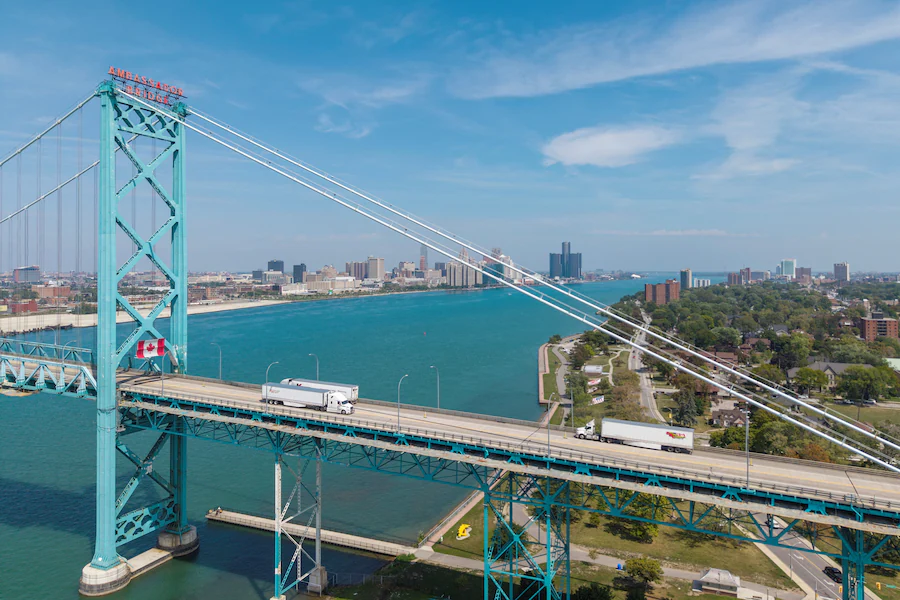
For decades, seamless trade with the United States was one of Canada’s biggest selling points on the global stage.
Not only was it responsible for around one-fifth of Canadian GDP, it also served as a lure for foreign money.
What happens when you take away preferential access to the world’s biggest economy? Would global investors walk away from Canada altogether?
This is the pressure point U.S. President Donald Trump is jabbing his finger into when he says things like: “Without us, Canada can’t survive.”
Funny thing, though. Roughly 20 months into this continental scrap, the world has not written Canada off. Far from it.
In fact, inbound investment is picking up. Foreign direct investment (FDI) into Canada is on the upswing, for example, having outpaced outbound FDI in 2025 for the first time in 12 years.
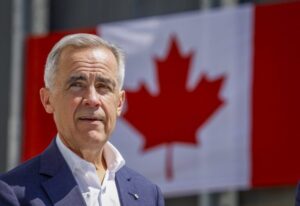
Prime Minister Mark Carney has been busily pitching Canada as a dependable partner as the U.S. proves itself, day by day, to be anything but.
Mr. Carney is aiming very high: make Canada an investment hub and “catalyze” $1-trillion in new investment over the next five years. In a little over a week, the Canada Investment Summit will assemble some of the most powerful investors in the world to sell them on Canada’s vast untapped potential.
Signs of progress are as yet modest. Still, we’ll take it. Modest progress is a whole lot better than being cut off from the world’s capital pools.
“It is a pleasant surprise that inward investment has held up as well as it has, given the uncertainty over future access to the U.S. market,” said Douglas Porter, Bank of Montreal chief economist.
He calls what we’re seeing so far “mild success.” But the direction of change is the key point here. Consider some of the indicators simultaneously pointing upward.
Incoming FDI hit nearly $100-billion in 2025, which is up roughly 60 per cent from the 10-year average, according to a BMO report. And for the first time since 2013, inflows have outpaced outflows.
This type of investment can have its downsides. The bulk of the upswing has been driven by mergers and acquisitions, which can feed into fears about the loss of control and the loss of Canadian jobs.
But it at least remains a sign of renewed investor interest in Canadian business.
On the bond side, international appetite is ravenous, especially for Government of Canada securities. Canada’s lower rate of inflation and more stable fiscal dynamics have made it a hot spot for fixed-income investors.
In the first half of this year, total foreign bond buying hit $185-billion, more than 50 per cent higher than the previous record pace for the period, according to a National Bank of Canada report.
Foreign investors have not always been so keen on Canadian stocks. But that’s changing, too. After four years of net selling, the flow has reversed over the past year, with $8-billion of net purchases of domestic equities. It doesn’t hurt that the S&P/TSX Composite Index has risen by 26 per cent over that time, easily outpacing the S&P 500.
As Globe and Mail columnist Andrew Willis recently pointed out, the big names in American energy are focused more on Canada than they are on Venezuela, where the U.S. has secured control of 65 billion barrels of oil reserves.
Last week, private-equity giants KKR & Co. Inc. and Apollo Global Management Inc. committed $2.7-billion to the expansion of Enbridge Inc.’s Westcoast natural gas pipeline.
And ExxonMobil Holdings Corp. and ConocoPhillips Co., both major players in the Alberta oil sands, are committing serious money to their Canadian operations.
While Mr. Trump framed the Venezuela deal as a threat to Canadian oil, no big American names aside from Chevron Corp. have shown interest in returning to the South American country.
Sorry, Donald. You have failed to poison the global investing community against Canada.
The fact is, there is only so much the President can do to cut Canada off. Canada is the No. 1 customer for the exports of around 35 U.S. states. More tariffs on Canadian goods going in the other direction, meanwhile, will mean even higher U.S. inflation. And the U.S. relies on Canadian oil to continue to flow to refineries specifically tooled to process it.
It makes sense that serious global investors are looking past the Trump administration to a normalization of Canadian-U.S. relations. Even if we never return to a pre-Trump status quo, it would be far too costly to try to seriously dismantle the continental trade regime.
But the Carney government is clearly striving for something greater than preserving access to the U.S.
Turning Canada into much more than a gateway to America will require shovels in the ground. While global capital is an important part of the turnaround effort, foreign investors scooping up Canadian assets doesn’t really help. Neither do portfolio flows.
The major projects already on the table only scratch the surface. We could be on the cusp of a Canadian investment “supercycle,” a recent TD Economics report explained. “The bigger thrust to economic growth has yet to be discovered.”
As Canada tries to sell itself as a destination for foreign capital, it’s at least clear that the investors of the world are listening.