 Adedokun Waliyu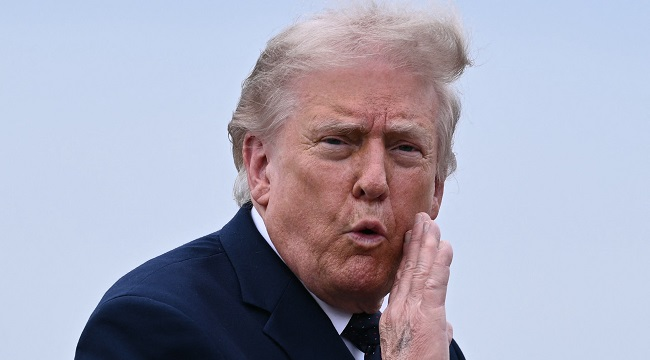
U.S. President Donald Trump on Wednesday accused Iran of delaying negotiations for a peace agreement and warned that the country would now “have to pay the price.”
His comments came a day after he suggested that talks aimed at ending the conflict were close to a breakthrough.
The latest tensions followed renewed military exchanges between the United States and Iran after Iran shot down an American Apache helicopter, further testing a ceasefire that has been in place since April but has been repeatedly disrupted by outbreaks of violence.
In a social media post, Trump said Iran had been “completely defeated” and criticized its approach to negotiations.
“Iran is all talk and no action,” he said. “They’ve taken too long to negotiate a deal that would have been great for them, now they will have to pay the price.”
The conflict began after U.S. and Israeli strikes on Iran, triggering months of fighting that destabilized the region and affected global markets before a fragile truce was established.
Iran announced that it had launched attacks on American military bases in Jordan and Bahrain after the United States carried out retaliatory strikes in response to the downing of the helicopter.
According to the U.S. military, the helicopter was the second crewed aircraft confirmed to have been shot down by Iran during the conflict. Both crew members were rescued safely.
Bahrain said its air defence systems intercepted and destroyed several Iranian aerial attacks, while Jordan’s military reported shooting down five missiles without casualties or significant damage.
Kuwait also stated that its air defences were engaging hostile aerial targets.
Iran’s foreign ministry called on neighbouring countries to prevent the United States and Israel from using their territories or facilities to support military actions against Iran.
Meanwhile, the U.S. Central Command (CENTCOM) said it had carried out strikes against Iranian air-defence systems, ground-control stations, and surveillance radar sites near the Strait of Hormuz.
The escalation prompted calls for restraint from Russia and China.
Russia expressed deep concern over the renewed confrontation and urged both sides to exercise restraint, while China called on all parties to stop escalating the conflict.
Earlier, Trump had said negotiations to end the war were in their final stages and suggested that progress could be achieved within a few days. However, following the helicopter incident, he stated that the United States was responding forcefully.
The ceasefire had already come under pressure over the weekend when Iran and Israel briefly resumed attacks before later halting operations again.
Iran has insisted that any comprehensive peace agreement must include a ceasefire in Lebanon, where fighting intensified after Hezbollah launched rockets into Israel on March 2.
Israel responded with extensive airstrikes and a ground offensive. According to reports, more than 3,600 people have been killed since the conflict expanded into Lebanon.
On Wednesday, medical sources reported that Israeli strikes in southern Lebanon killed 12 people.
The Israeli military had earlier ordered residents of the southern city of Tyre to evacuate, leading to large-scale movement of civilians. Many residents fled northward, causing heavy traffic congestion.
Further north in Sidon, displaced families from Tyre were seen arriving with their belongings. A strike later hit central Sidon, with emergency workers responding to a burning vehicle and reports of casualties.
One resident of Tyre, Elias Barbour, said his family was leaving for Beirut until the situation became clearer, expressing frustration and uncertainty over the continuing violence.
The conflict remains volatile, with no clear resolution yet in sight despite ongoing diplomatic efforts.