 Adedokun Waliyu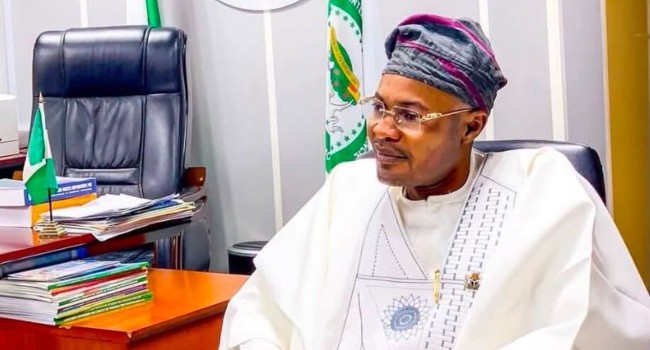
The Nigeria Police Force has arrested Adeniyi Adeyemi, the self-acclaimed Director-General of the controversial Presidential Foreign Investment Promotion Council (PFIPC).
The Force Public Relations Officer, Okokon Iniedu, confirmed that Adeyemi was apprehended by operatives of the Intelligence Response Team (IRT) in Osun State.
According to the police spokesperson, the arrest was carried out following ongoing investigations into allegations against Adeyemi. A video released by the police showed him being questioned shortly after his arrest.
The development comes after the Federal High Court in Abuja issued a bench warrant for Adeyemi’s arrest when he failed to appear for his scheduled arraignment.
Justice Umar granted the arrest order after an application by police counsel, Wisdom Madaki, directing security agencies to arrest the defendant and produce him before the court on September 30 for arraignment.
Adeyemi is expected to face an eight-count charge bordering on alleged forgery, fraud and impersonation.
According to the charges, he is accused of forging an appointment letter purportedly issued by President Bola Tinubu and allegedly signed by the Chief of Staff to the President, Femi Gbajabiamila. He is also accused of forging official State House letterheaded documents dated March 8, 2024.
The Federal Government further alleges that Adeyemi forged documents requesting collaboration with the Ministry of the Area of Land as well as requests for office space across Nigeria’s 36 states, falsely presenting them as official communications from the Presidency.
He is also accused of falsely presenting himself as the Director-General of the Presidential Foreign Investment Promotion Council, an agency which the Presidency has publicly stated does not exist.
The controversy intensified after Adeyemi circulated photographs of himself with several prominent Nigerians and claimed to be the head of the council. He also alleged that he paid money to the Chief of Staff, Femi Gbajabiamila, to secure the appointment. The Presidency strongly denied both the existence of the council and Adeyemi’s claims.
In his defence, Adeyemi argued that the council’s inclusion in the 2026 national budget showed that it was a legitimate government agency. He also alleged that his life was under threat and insisted that he would defend himself through the legal process.
He maintained that the matter should be left for the courts to determine, expressing confidence that the judicial process would establish the truth.