 Adedokun Waliyu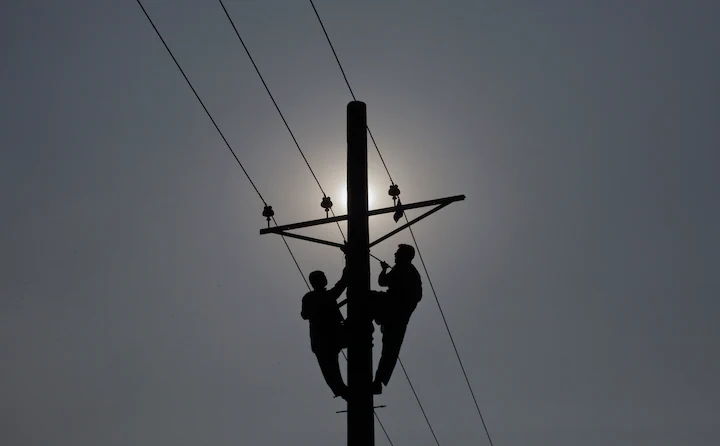
Pakistan’s power shortages eased from six hours of daily outages to less than three hours, after water releases from dams nearly quadrupled and pushed hydropower output to its highest in days, a spokesperson for the country’s power division said on Friday.
Hydropower generation rose to 4,100 megawatts (MW) late on Thursday, from 1,800 MW before the dam releases. The higher output also eased grid constraints and allowed an additional 400 MW to be transmitted from the country’s south, the spokesperson said.
The overnight improvement comes after Pakistan’s electricity shortfall doubled this week to 3,400 megawatts – about a sixth of total demand – causing six to seven hours of outages in parts of northern Pakistan and hitting telecommunications.
The shortfalls were mainly due to a 48% annual decline in hydropower output as provinces had not been asking for water releases from dams due to heavy rains reducing the need for irrigation, Power Minister Awais Leghari told Reuters in an interview on Thursday.
It was not immediately clear what had driven the increased water releases.
Hydropower generation will likely remain high in the coming days as the monsoon crop season gets underway, unless more rains reduce the need for irrigation.
Pakistan, which is trying to mediate an end to the Iran war, expected a minimal impact from a halt to LNG imports due to the conflict compared with the widespread outages that followed Russia’s invasion of Ukraine in 2022. That assessment did not account for the drop in hydropower.
Pakistan has no immediate plans to buy LNG on the spot market, and will instead rely on fuel oil and a recovery in hydropower to ease outages, Leghari said. After Qatar suspended LNG supplies, Pakistan partly offset shortfalls of up to 2,500 MW by running furnace oil plants at full capacity.
“The cargoes to be offloading that LNG and then all the other expenses of the terminal… that easily adds another $4-$5 to the spot price. So I think furnace oil might be a little bit cheaper,” Leghari told Reuters in an interview on Thursday.
“We just disciplined ourselves as a nation to be able to bear the discomfort of it and not let the prices actually push up inflation,” he said.