 Adedokun Waliyu
The Nigeria Centre for Disease Control and Prevention (NCDC) has identified two additional suspected cases of Ebola virus disease and 53 primary contacts, as health authorities scramble to contain the fallout from Nigeria’s first confirmed Ebola infection in over a decade.
Jide Idris, Director-General of the NCDC, disclosed the development at a press briefing in Abuja on Sunday.
“We have established two additional suspected cases and 53 primary contact links. They are primary contacts. We have an isolation centre and a quarantine centre,” Idris told journalists.
The NCDC boss said approximately 12 public and private laboratories are now available to test for Ebola, adding that the centre had strengthened its laboratory capacity to prevent further spread of the disease. He said the agency was maintaining heightened surveillance to ensure suspected cases are promptly investigated and tested.
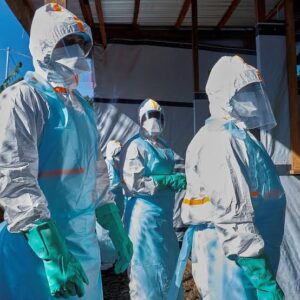
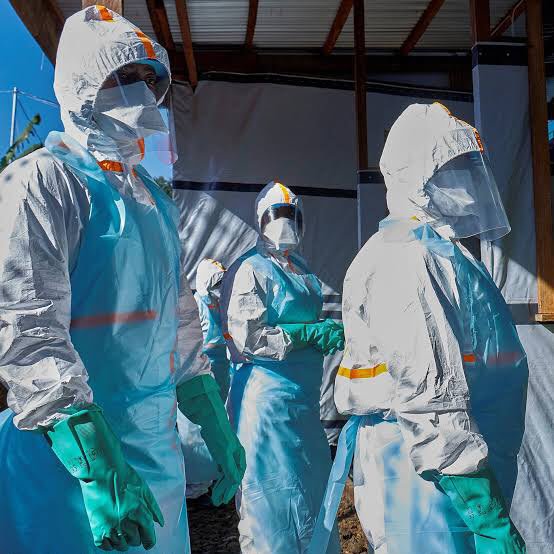
Idris urged public and private healthcare facilities across the country to strengthen screening, triage, and infection prevention measures while ensuring healthcare workers have adequate personal protective equipment (PPE).
The NCDC said its public health teams were also identifying and monitoring people who may have been exposed to the confirmed case for 21 days after their last possible exposure.
Idris urged Nigerians contacted by public health officials to cooperate with contact-tracing teams and provide accurate information about their movements, contacts, and symptoms.
The latest development comes amid an escalating public health emergency triggered by Nigeria’s confirmation of an Ebola case in the Federal Capital Territory (FCT).
The index patient, a woman who recently arrived on an international flight from Uganda, was admitted to a private hospital in the FCT for several days before her infection was confirmed.
She tested positive for the Bundibugyo strain of the Ebola virus, a rare species first identified during an outbreak in Uganda in 2007.
The patient’s condition has since deteriorated into multi-organ failure, according to officials at the NCDC.
Genomic analysis conducted by the NCDC and Professor Christian Happi’s laboratory at Redeemer’s University, Ede, Osun State, subsequently revealed that the virus isolated from Nigeria’s only confirmed case appears closely related to the virus found in the index case in Kenya. The finding may alter understanding of how the virus entered Nigeria.
Coordinating Minister of Health and Social Welfare, Professor Muhammad Ali Pate, disclosed the genetic link, noting that there was no evidence of travel linking the Kenyan index case to Nigeria. However, he added that “the viruses are appearing to be related”.
Before Sunday’s announcement, health authorities had identified 44 contacts linked to the confirmed case, primarily healthcare workers and individuals associated with the health facility where the patient was treated.
The 53 primary contacts now identified include 44 people from that facility, three household members of the patient—her driver, chef, and husband—three individuals who attended to her at Julius Berger Clinic before she reached the facility where Ebola was confirmed, and three members of the team who collected samples from the patient.
Idris explained that contact tracing was not limited to people who had direct interactions with the patient, as investigators were also seeking to identify people who might have subsequently been exposed through those already listed.
“For each person, we are going to ask questions. We have to establish who they have been in contact with. If we can identify those people, they will also be monitored,” he said.
The NCDC boss acknowledged that capabilities and competencies at the subnational level are not as high as they should be, stressing that training remains one of the agency’s most important priorities.
Nigeria has grappled with Ebola before. The country’s most notable encounter came in 2014, when an acutely ill traveller from Liberia arrived at the Murtala Muhammed International Airport in Lagos and was confirmed to have Ebola after being admitted to a private hospital.
The Federal Ministry of Health, with guidance from the NCDC, declared an Ebola emergency. Nigeria ultimately recorded 20 cases, comprising 19 laboratory-confirmed and one probable, before the outbreak was contained.
The 2014 response was widely praised internationally, with the NCDC playing a central coordination role that was credited with preventing a wider catastrophe in Africa’s most populous nation.
However, the current outbreak has raised fresh questions about the country’s preparedness, with the index patient reportedly spending several days in a private hospital before her infection was confirmed.
The Federal Government has insisted there is no evidence of community transmission. Minister Pate stated that high-risk contacts have been quarantined and others isolated in line with public health guidelines.
Pate said the index patient was showing significant signs of recovery, though he cautioned against complacency.
“We currently have one confirmed case, and our priority is to contain it and prevent transmission into communities or a wider outbreak. We are working very hard to ensure that this does not happen,” he said.
The government has mobilised additional resources, including funds released by President Bola Tinubu to strengthen the NCDC’s capacity, and has briefed the Presidential Task Force, the Nigeria Governors’ Forum, and the National Economic Council.
All state governments have been directed to complete their Ebola response plans urgently, with a whole-of-government approach involving the Federal Ministry of Health, the Ministry of Aviation, and other relevant agencies.