 Adedokun Waliyu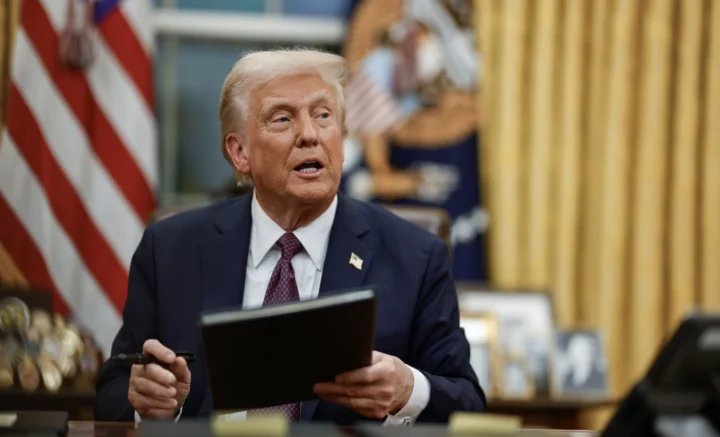
Nigeria is among 60 countries affected by a new round of United States tariffs that took effect on Friday, replacing an earlier temporary global import duty introduced by President Donald Trump.
The new tariffs range from 10 percent to 12.5 percent and target major trading partners, including China, India, Japan, South Korea, the European Union and Nigeria.
According to the Office of the United States Trade Representative, the measures are intended to strengthen enforcement against forced labour in global supply chains and protect American industries.
US Trade Representative Jamieson Greer said the targeted economies account for the majority of US trade and stressed that it was time for trading partners to strengthen their own efforts against forced labour.
The latest tariffs follow a Supreme Court ruling that struck down several of President Trump’s earlier tariff measures. In response, the administration used a different legal authority under Section 301 of the Trade Act of 1974 to introduce the new duties, which are expected to be more resistant to legal challenges.
Countries that have adopted or committed to forced labour import bans, including Canada, India, the United Kingdom and the European Union, will face a 10 percent tariff.
Meanwhile, Nigeria is among the countries placed under the standard tariff category and will be subject to a 12.5 percent duty on exports to the United States.
Other countries in the 12.5 percent category include China, Japan, South Korea, Australia, Brazil, Egypt, Morocco, Saudi Arabia, South Africa, Thailand, the United Arab Emirates and Vietnam.
Some products will be exempt from the new tariffs, including goods already covered by sector-specific duties such as steel and aluminium, certain energy products, fertilisers and products traded under the United States-Mexico-Canada free trade agreement.
The announcement drew criticism from several countries. Japan expressed regret over the decision, Australia described the tariffs as unjustified, while China condemned the move, warning that trade wars do not benefit any nation.
The European Union, however, welcomed the decision, saying the new tariff arrangements were consistent with previous trade commitments reached with the United States.
Trade experts say the new measures strengthen the Trump administration’s protectionist trade policy while giving Washington greater leverage in future trade negotiations. They also warned that additional investigations into other countries could lead to more tariffs in the coming months.
Under the new policy, Nigeria will face a 12.5 percent tariff on goods exported to the United States.