Netanyahu Calls For National Unity Government, Warns Iran Could Revive Nuclear Weapons Programme
 Adedokun Waliyu
3 min read
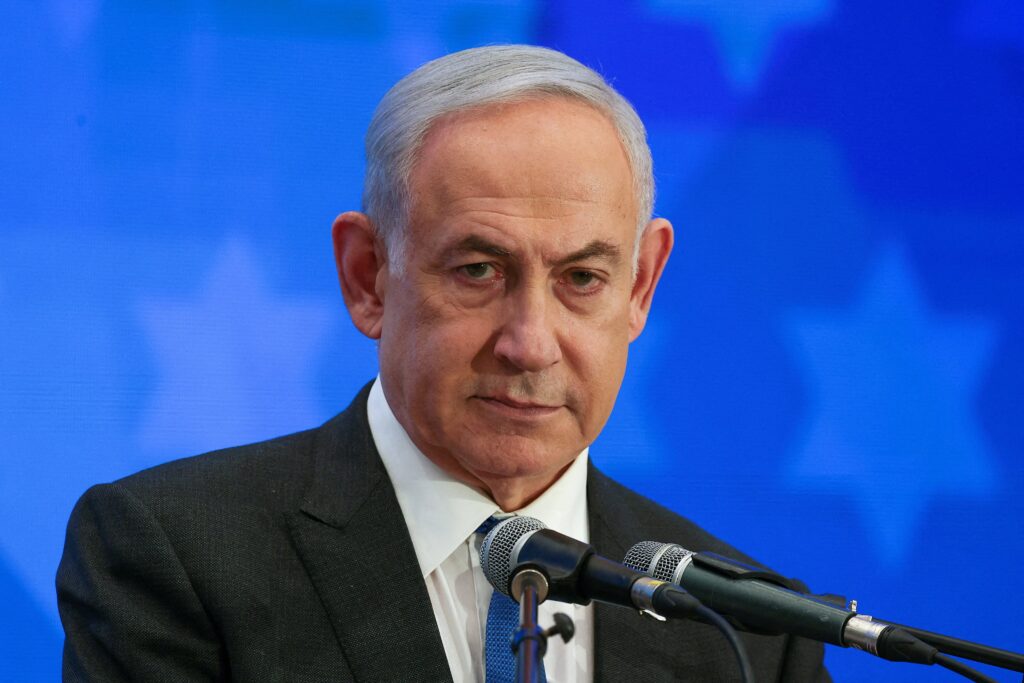
Israeli Prime Minister Benjamin Netanyahu has called for the formation of a national unity government, warning that Iran is working to revive its nuclear programme and could use nuclear weapons against Israel if it succeeds in developing them.
Netanyahu made the call following what he described as an important conversation with Gadi Eisenkot, a former Chief of Staff of the Israel Defence Forces (IDF). He said the meeting reinforced his belief that Israel needed a broad-based government to confront its growing security challenges.
In a statement issued on Thursday, Netanyahu said he and Eisenkot had known each other for many years, dating back to Eisenkot’s tenure as IDF Chief of Staff and even before then.
According to Netanyahu, the discussion strengthened his conviction that Israel must establish a national unity government comprising all political parties that support the existence of the country as the state of the Jewish people.
He argued that such a government would be better positioned to confront what he described as the immense and complex security challenges facing Israel.
The Israeli leader specifically identified Iran as a major threat, alleging that the Iranian regime was once again working to revive its nuclear programme despite previous efforts to prevent it from developing nuclear weapons.
“The Iranian regime, which seeks to destroy Israel, is once again working to revive its nuclear program. And let this be clear: this murderous regime, which did not hesitate to murder many thousands of its own people, will not hesitate to use nuclear weapons against us,” Netanyahu said.
He warned that Iran could move towards developing nuclear weapons once it resumed uranium enrichment and accelerated its weapons development programme.
Netanyahu insisted that Israel must do everything possible to prevent Tehran from achieving that objective, referencing previous Israeli military operations, which he identified as ‘Am Kelavi’ and ‘Shaagat Ha’ari’.
He claimed that those operations had helped avert what he described as an immediate threat of annihilation against Israel.
“We must remove this existential threat from over our heads once and for all,” he declared.
Netanyahu also criticised the possibility of forming a narrow government or one dependent on political groups he accused of supporting terrorism, arguing that such an administration would be incapable of addressing Israel’s security and national challenges.
He maintained that only a broad national unity government could achieve the country’s long-term security objectives and provide stability for many years.
The Prime Minister further presented the proposed unity arrangement as an opportunity to address political divisions within Israel, saying it would respond to widespread public demands for national reconciliation.
According to him, citizens across the country were increasingly calling for an end to political disagreements and a collective effort to secure Israel’s future.
He illustrated the need for unity by referencing Elisha Midan and Elisaf Peretz, as well as Talik Gvili and Shira Shapira, alongside what he described as a broad Zionist public willing to join forces in defence of Israel’s future.
Addressing Eisenkot directly, Netanyahu urged him to abandon efforts to establish a fragile and dangerous government that would be unable to adequately confront the country’s security and national challenges.
Instead, he called on Eisenkot to join him in negotiations without preconditions, urging both sides to put aside their political disagreements and boycotts in the interest of national security.
“Let us enter the room, without preconditions, set aside all our disagreements and all our boycotts, and reach agreements for Israel’s security and future, including on the issue of conscription, which can be resolved together with representatives of the Haredi public,” Netanyahu said.
The proposed unity government, he added, should also address the contentious issue of military conscription involving the ultra-Orthodox Jewish community, commonly known as Haredim, through negotiations with their representatives.
Netanyahu concluded his appeal by referring to an incident involving individuals who deliberately walked out during the singing of Israel’s national anthem, ‘Hatikvah’, saying the appropriate response should be the establishment of what he described as a government of hope.
“The response required for those who deliberately walked out during ‘Hatikvah’ is to establish the government of hope — the national unity government,” he said.