 Adedokun Waliyu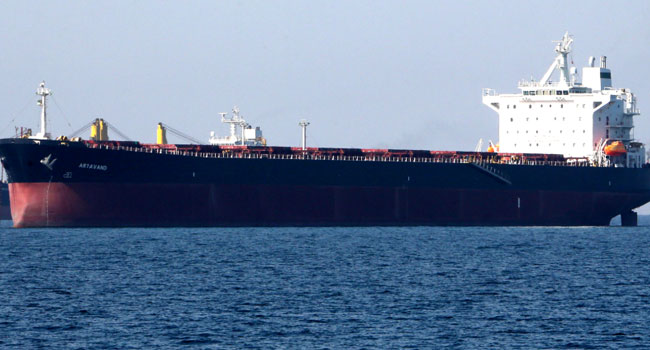
Traffic through the Strait of Hormuz declined sharply over the weekend after a vessel was struck on Saturday and renewed military exchanges between the United States and Iran raised concerns about the stability of their preliminary peace agreement.
According to maritime tracking firm Kpler, 29 commodity vessels passed through the strategic waterway on Saturday, while only 12 transited on Sunday. This was a significant drop from the 70 crossings recorded last Wednesday after the June 15 memorandum of understanding between Tehran and Washington boosted shipping activity.
Although Iran warned ships against using unapproved routes, vessels continued using multiple lanes. Following Saturday’s attack, some ships used a southern corridor through Omani waters before overall traffic slowed. Data from MarineTraffic, which tracks vessels with active transponders, indicates that additional ships may have crossed with their tracking systems switched off.
More vessels entered the Gulf than departed during the weekend, reversing the previous week’s trend, when efforts focused on evacuating stranded seafarers. A United Nations-led operation to evacuate about 11,000 seafarers was suspended after a vessel was struck in the Gulf of Oman.
On Sunday, four oil tankers and one container ship entered the Gulf through the southern Omani corridor under escort by U.S. Navy vessels, while no ships used the same route to leave the Gulf.
Meanwhile, Iran announced it had held its first meeting with Oman on managing traffic through the Strait of Hormuz, as the United States reiterated that it would not accept transit fees for passage through what it considers an international waterway.