Health Canada Authorizes Moderna Clinical Trial For New Ebola Vaccine Candidate
 Adedokun Waliyu
2 min read
Adedokun Waliyu
2 min read
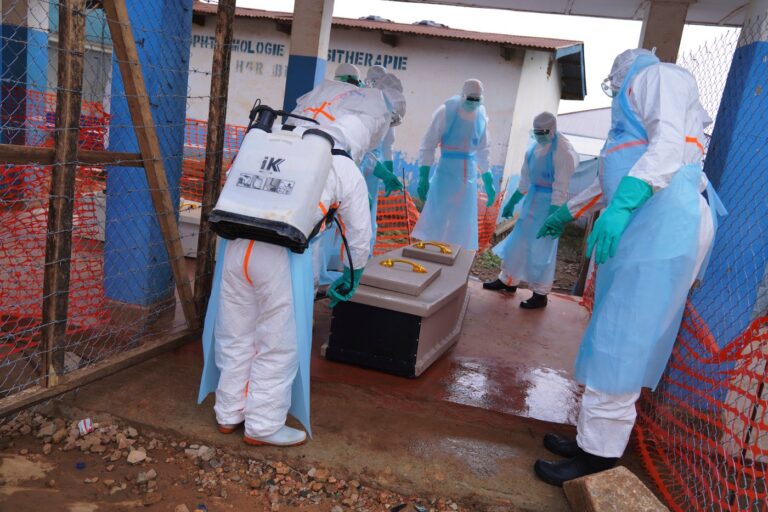
Health workers disinfect a coffin of an Ebola victim at Ebola Treatment Center at Bunia General Hospital in Ituri, Congo, Wednesday, July 22, 2026. (AP Photo/Dirole Lotsima Dieudonne)
Health Canada has authorized Moderna to conduct a clinical trial on a new mRNA vaccine that targets the form of Ebola blamed for the largest outbreak ever reported in the Democratic Republic of Congo.
There is no vaccine or treatment for the Bundibugyo type of Ebola, which has killed more than 1,700 people in Congo.
Ebola has never been detected in Canada but it will be the first country to participate in Moderna’s trial in a global race to develop a vaccine.
Participants are healthy adults and will not be exposed to the virus to test the vaccine.
A spokesperson for Moderna says the first volunteer in the trial received the shot on Monday in Truro, N.S., and that the company expects to enrol 80 people in Truro, Halifax and Toronto.
The Phase 1 trial will evaluate the vaccine’s safety, determine the right dosage, monitor for side effects and study the antibody response.
Health Canada said in a release issued Tuesday that the department authorized the clinical trial on July 30.
The United Kingdom has also started a clinical trial for a Bundibugyo virus vaccine, made by the University of Oxford.
Health Canada said Moderna would need to do Phase 2 and 3 clinical trials to determine the vaccine’s effectiveness before it could seek authorization for wider use.
“Any final submission would need to meet Health Canada’s stringent safety, efficacy and quality standards before the vaccine could be allowed on the Canadian market,” the department’s news release said.
Ebola is spread through unprotected contact with the bodily fluids of people sick with the virus or who have died from it. Ebola is a filovirus, which can cause severe hemorrhagic fever.
Moderna’s executive director of global health security and R&D partnerships said Canada was chosen for the first clinical trial “based on Moderna’s experience conducting early-phase trials there, Health Canada’s regulatory oversight, and the country’s long-standing contributions to filovirus research.”
“Canadian researchers and participants are contributing an important first step in a broader international effort to develop a vaccine against a form of Ebola for which no approved protection is currently available,” Hamilton Bennett said in an emailed statement.
The Bundibugyo form of Ebola was first declared an outbreak on May 15 and has spread in Congo and neighbouring Uganda. The World Health Organization has deemed it a public health emergency of international concern.