 Adedokun Waliyu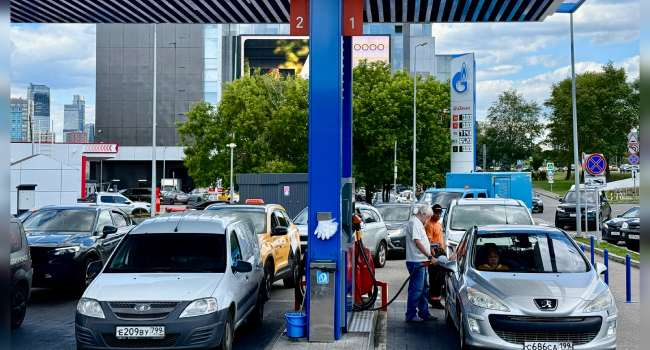
Standing at a Moscow petrol station, taxi driver Safarali Nazarov said he was so frustrated at being forced to queue for fuel that he was considering quitting his job.
Russia — one of the world’s largest oil producers — has introduced a swath of restrictions on petrol sales across the country, as Ukrainian strikes on its refineries, depots and logistics crimp domestic supply.
Several regions have introduced rationing, while some gas stations and chains have sold out or closed due to a lack of supplies.
“It’s really, really tight,” Nazarov, 55, told AFP at a Lukoil petrol station near Moscow’s business district.
“We stand in line for an hour, hour and a half … it’s time to quit this job and leave.”
There were around 15 vehicles waiting for their turn at the pump.
Petrol shortages in Moscow are highly unusual.
Outside the capital, the situation is worse, Nazarov said.
“You drive 200 kilometres away from Moscow and they don’t give you more than 10 litres. In some places they don’t give any at all.”
‘Under Control’
Ukraine has in recent months intensified a campaign of long-range drone strikes against Russia’s energy facilities — an attempt to cut off a vital source of revenue for the Kremlin.
Last week, a major oil refinery on the outskirts of Moscow was hit, pouring thick black smoke over the capital in dramatic scenes.
Ukrainian President Volodymyr Zelensky called the strikes fair retaliation for Moscow’s nightly missile and drone barrages on Ukrainian cities.
In a televised meeting this week, Russian Deputy Prime Minister Alexander Novak told President Vladimir Putin that the fuel shortages were “not simple” but “under control”.
While criticising Ukraine, Russian officials have not linked the shortages to the recent wave of strikes.
Moscow has restricted exports and ordered retailers to provide live data on fuel availability at filling stations to coordinate the state’s response.
The annexed Crimean Peninsula — which has completely banned petrol sales to the public — and southern Russia have been the most heavily affected.
However, shortages have also been reported as far away as Siberia and the Far East.
Images of cars queuing outside petrol stations have become the latest sign of the domestic impact of Russia’s offensive in Ukraine — a military campaign launched in early 2022 that the Kremlin had hoped would end within days.
On Wednesday, AFP reporters saw queues at several filling stations. Some had sold out of various fuel grades, others were limiting sales to 30 litres per person, while some stations were completely shut.
Another taxi driver, 44-year-old Yana Svarovskaya, said she had also started seeing queues.
“There are long lines, yes that happens … some of the local stations in my area are closed,” she said at a fuel station in southwest Moscow.
Darya, a 25-year-old blogger who declined to give her surname, said she had noticed the shortages but was not overly concerned.
“Either they have fuel and you have to wait a bit — about 15 minutes or so, not longer — or we would just drive past, see that the pumps are completely closed and look for others, but there hasn’t been any really stressful situation,” she told AFP.