Dangote, Trump, Others Named In TIME 100 Most Influential People For 2026
 Adedokun Waliyu
2 min read
Adedokun Waliyu
2 min read
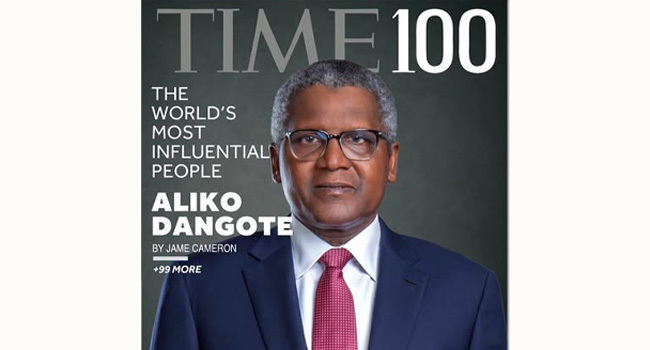
Aliko Dangote has been named among TIME Magazine’s 100 Most Influential People in the World for 2026.
He joins a global list that includes leaders such as Donald Trump, Xi Jinping, Benjamin Netanyahu, Mark Carney, and Pope Leo XIV, alongside business and technology figures like Sundar Pichai and Neal Mohan.
The annual TIME100 list recognises individuals whose ideas, leadership, and actions are shaping the future across politics, business, culture, and society.
This marks Dangote’s second appearance on the list, following his first recognition in 2014. He is the only Nigerian featured in the 2026 edition and is listed under the “Titans and Innovators” category.
Other Notable Honourees
Among those recognised in the same category are Reid Wiseman, commander of the Artemis II mission, as well as philanthropists Michael Dell and Susan Dell.
Also included is fashion entrepreneur Ralph Lauren.
In the “Pioneer” category, individuals such as Kiran Musunuru and Rebecca Ahrens-Nicklas were recognised for breakthroughs in genetic therapy, alongside Aaron Williams for advancements in heart transplant readiness.
In entertainment and culture, figures like Ranbir Kapoor, Dakota Johnson, and Kate Hudson were also honoured.
Business and Philanthropy Impact
As founder and president of the Dangote Group, Dangote has played a major role in driving industrialisation across Africa.
The group has invested in sectors such as cement, sugar, agriculture, infrastructure, and energy, helping reduce dependence on imports while creating millions of jobs.
TIME highlighted Dangote’s vision of building African industries using local resources to compete globally, noting his large-scale investments in energy and manufacturing.
Beyond business, his philanthropic work through the Aliko Dangote Foundation supports healthcare, education, nutrition, disaster relief, and economic empowerment across the continent.
The recognition reflects growing global acknowledgement of African leadership and innovation, with Dangote seen as a key figure shaping the continent’s economic future.