
 Adedokun Waliyu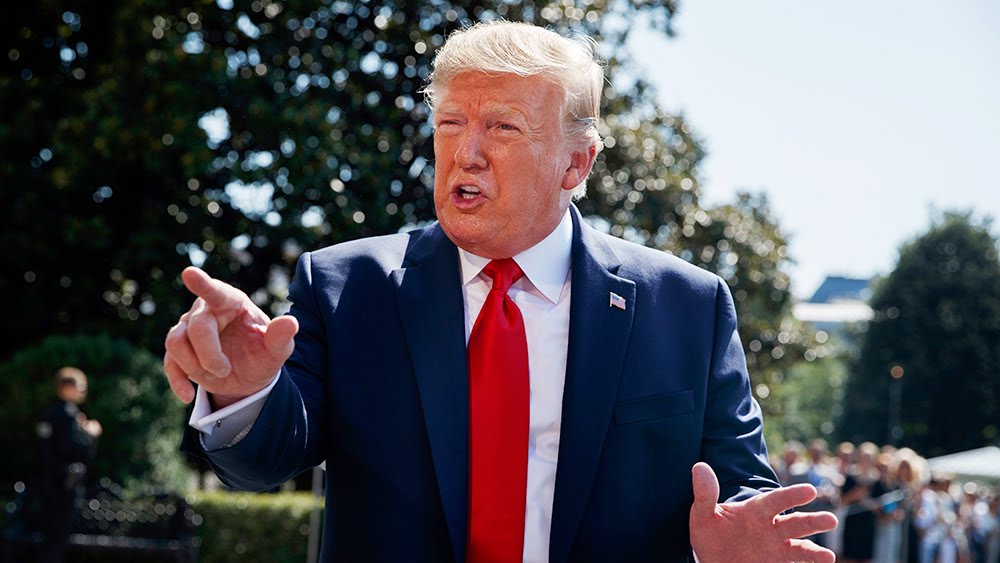
US President Donald Trump has dismissed critics of his agreement with Iran, calling those who accused him of making too many concessions to end the war “fools,” ahead of negotiations in Switzerland on implementing the deal.
Oil prices fell sharply after Trump and his Iranian counterpart signed an agreement aimed at ending the Middle East conflict and reopening the Strait of Hormuz. However, two months of negotiations remain before the agreement is fully implemented.
In an unexpected development, Trump signed the agreement during a candlelit dinner with French President Emmanuel Macron at the Palace of Versailles outside Paris. Macron praised the signing, calling it a major diplomatic achievement.
Responding to criticism, Trump wrote on social media that those who believed he had not been tough enough on Iran were “either jealous, bad people, or stupid,” pointing to record stock market gains and falling oil prices as evidence that the agreement was beneficial.
Iranian President Masoud Pezeshkian also signed the agreement. Iranian Foreign Ministry spokesman Esmaeil Baqaei said the focus should now shift to implementing the deal.
Oil prices continued to decline, extending losses recorded after news of the agreement first emerged.
‘Allows for Peace’
The agreement is expected to bring an end to the US-Israeli conflict with Iran, following five weeks of intense fighting that severely disrupted shipping through the Strait of Hormuz and drove up global energy prices.
Pakistan’s Prime Minister Shehbaz Sharif, who helped mediate the agreement, announced that it would take effect immediately and that Iran would reopen the Strait of Hormuz. He also signed the accord.
A two-month negotiation period has now begun, with attention focused on reopening the strategic waterway and reaching a final agreement on Iran’s nuclear programme.
President Macron described the agreement as one that “allows for peace,” reopening the Strait of Hormuz without tolls and providing 60 days to conclude negotiations on Iran’s nuclear, ballistic, and regional activities.
Although the agreement was initially expected to be signed in Switzerland by senior US and Iranian officials, Baqaei later stated that an in-person signing ceremony was no longer necessary. However, Sharif confirmed that an official ceremony would still be held in Switzerland, where technical discussions would begin.
Under the agreement, the United States will immediately lift oil sanctions that have severely affected Iran’s economy. If a final nuclear agreement is reached, Washington will also help release a $300 billion reconstruction fund backed by regional countries.
The head of the UN’s nuclear watchdog, Rafael Grossi, said the agency was ready to begin defining the practical steps needed to implement the agreement.
US officials also stated that Iran would dilute its stockpile of enriched uranium under international supervision.
However, Iran’s ballistic missile programme was not included in the agreement. Baqaei insisted that Iran’s defence capabilities were not open for negotiation.
‘Foreign Policy Blunder’
The agreement has drawn criticism from hardliners within Iran, where the conflict has been described as an “imposed war.” Nevertheless, Parliament Speaker Mohammad Bagher Ghalibaf described the agreement as a US failure, while President Pezeshkian called it “historic.”
In the United States, some of Trump’s allies have also questioned the decision to end the conflict, during which 13 American service members were killed and large amounts of US military resources were used.
At the G7 summit, Trump warned that he was prepared to “bomb the hell” out of Iran if it violated the agreement.
Republican Senator Bill Cassidy described the deal as “the worst foreign policy blunder in decades,” arguing that Iran’s nuclear ambitions had not been sufficiently restricted and that Tehran had learned the value of threatening the Strait of Hormuz.
Some commentators also argued that the agreement granted Iran significant financial benefits without requiring it to dismantle its nuclear programme.
The agreement also mentions Lebanon, but it remains unclear whether the conflict there will be addressed during the upcoming negotiations.
Lebanon became involved in the conflict after Hezbollah launched rockets at Israel in support of Iran on March 2, prompting Israeli airstrikes and a ground offensive.
Although violence has decreased since the announcement of the agreement, Lebanese state media reported that an Israeli drone strike in southern Lebanon killed one person on Thursday.