
 Adedokun Waliyu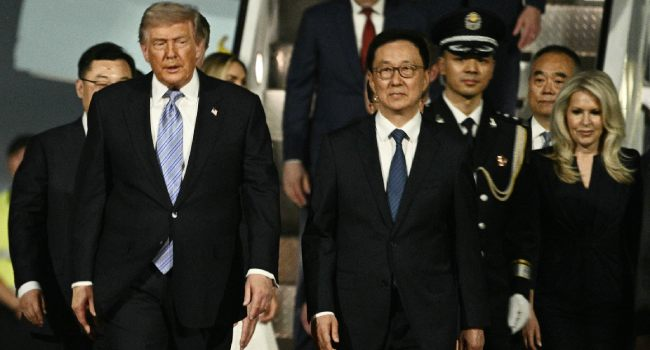
United States President Donald Trump has arrived in China for a crucial summit with Chinese President Xi Jinping amid rising tensions over trade, Taiwan, artificial intelligence, and the ongoing Iran conflict.
Trump landed at Beijing Capital International Airport aboard Air Force One on Wednesday evening, marking the first visit to China by a sitting US president in nearly a decade.
He was welcomed by Chinese Vice President Han Zheng as preparations began for talks expected to shape future relations between the world’s two largest economies.
The summit, initially planned for March, had been postponed because of escalating tensions in the Middle East and the joint US-Israeli military campaign involving Iran.
Despite the geopolitical tensions, Trump appeared heavily focused on economic and technology cooperation during the trip.
Top American business figures including Jensen Huang and Elon Musk were part of the presidential delegation.
Trump said he intended to encourage China to further open its markets, particularly in the rapidly expanding artificial intelligence sector.
The issue is especially sensitive because China currently faces restrictions on purchasing advanced semiconductor chips from Nvidia under US export controls imposed over national security concerns.
Formal talks between Trump and Xi are scheduled to take place Thursday at the Great Hall of the People, followed by a state banquet hosted by the Chinese government.
The two leaders are also expected to hold additional meetings and a working lunch before Trump returns to Washington on Friday.
Major topics expected to dominate discussions include trade tariffs, US arms sales to Taiwan, China’s export controls on rare earth minerals, and the growing conflict involving Iran.
Trump revealed before departing Washington that he planned to discuss the Middle East crisis directly with Xi, particularly China’s relationship with Iran, which remains one of Beijing’s key oil suppliers.
Meanwhile, China’s Foreign Ministry said Beijing welcomed the visit and expressed readiness to “expand cooperation and manage differences” with the United States.
The meeting comes amid continuing trade tensions between both countries after tariff disputes last year triggered retaliatory measures exceeding 100 percent on some goods.
Analysts say both leaders may attempt to extend the temporary tariff truce reached during their previous meeting in South Korea in October.
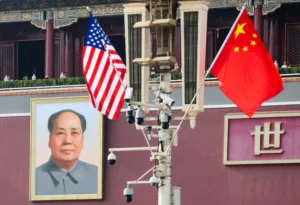
Security across Beijing was visibly tightened ahead of the summit, with increased police presence and stricter checks reported across major transport hubs.
Observers around the world, particularly in Taiwan and across Asia, are expected to closely monitor the summit for any indication of changes in American foreign policy toward China and regional security issues.