

 Adedokun Waliyu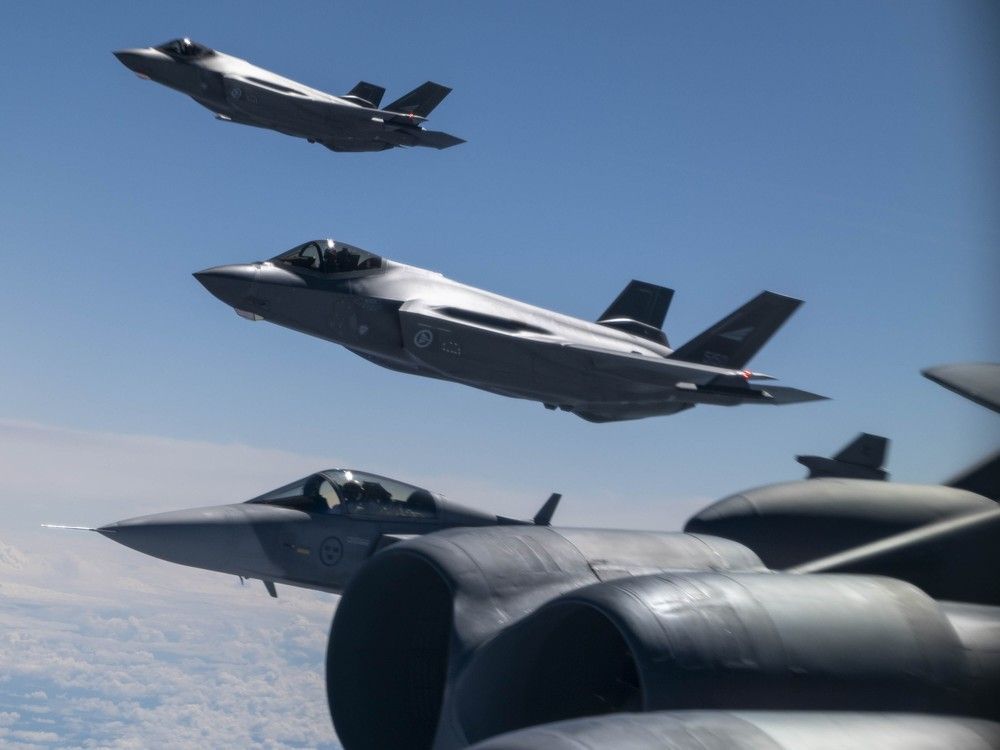
Canada’s review of its planned purchase of U.S.-made F-35 fighter jets has intensified after controversial remarks by the U.S. ambassador to Canada, Pete Hoekstra, gave Prime Minister Mark Carney political room to reduce or rethink the deal.
Canada is currently committed to buying only 16 F-35s, with a decision pending on whether to proceed with 72 more. Carney ordered a review in March following sovereignty-related tensions with U.S. President Donald Trump. While Canada’s military leadership argues the F-35 is superior to Sweden’s Saab Gripen, critics say Hoekstra’s warnings—that Canada could face NORAD consequences or U.S. jets entering Canadian airspace—amounted to threats and backfired politically.
Defence experts and analysts dispute claims that Gripens are incompatible with U.S. forces, noting that Gripens already operate alongside F-35s within NATO. Reports suggest Canada is now considering a split fleet—about 40 F-35s and up to 80 Gripens—to balance interoperability with sovereignty.
Concerns over the F-35 include:
Dependence on U.S. software updates
U.S. ownership of spare parts
High maintenance costs
Low readiness rates (about 36% mission-capable in 2023)
European officials and U.S. lawmakers have also raised alarms over reliability and long-term sustainment costs. Critics warn that a hostile U.S. administration could effectively ground Canada’s F-35s by cutting off parts or updates.
No final decision has been made, but Hoekstra’s remarks have strengthened the political case for Canada to scale back the F-35 purchase and diversify with Gripens, framing the move as defending national sovereignty rather than weakening defence.