

 Adedokun Waliyu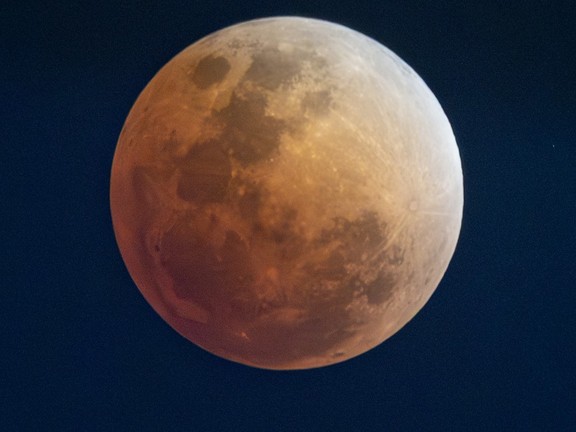
The moon passes through the Earth’s shadow, resulting in a lunar eclipse, also known as a “blood moon”, on Tuesday, March 3, 2026 in Santa Rosa, Philippines.
The “blood moon” lived up to its name during a rare lunar eclipse early Tuesday morning in Canada.
Depending on where you live, skygazers either stayed up late or woke up early to catch a glimpse of the moon turning a reddish-orange hue.
While the Canadian Space Agency explained how to witness the total eclipse overnight, residents farther east would have a shorter window.
“While Quebec and Ontario will catch the start of totality, for the Maritimes, it is truly a race against the sunrise,” the agency wrote on Facebook. “The moon will set during the partial phase, creating a dramatic visual as the Earth’s shadow guides the moon toward the horizon.”
During the event, the moon slowly moves into Earth’s shadow and begins to darken. Once the Earth is aligned perfectly between the sun and moon, the lunar surface turns a striking shade of red.
According to NASA, a lunar eclipse is typically visible from only half of Earth.
“During a lunar eclipse, the moon appears red or orange because any sunlight that’s not blocked by our planet is filtered through a thick slice of Earth’s atmosphere on its way to the lunar surface,” said NASA. “It’s as if all the world’s sunrises and sunsets are projected onto the moon.”
“I’m not a morning person; I’m just going through a phase. Specifically, the lunar eclipse phase,” Mary Derouard wrote on Facebook alongside a detailed image of the reddish moon taken in Toronto shortly before 6 a.m.
Belleville resident Paul Lantz posted several photos of the “blood moon” to Facebook as well. He said the view was less than spectacular due to overcast conditions while the moon competed with the sunrise, adding the photos were taken near the Bay of Quinte.
Jody Rose said the view from Winnipeg Beach, about 80 km north of Winnipeg, was mostly cloudy, but she managed to capture an orange-tinged moon.
The next total lunar eclipse will happen on Dec. 31, 2028, when Space.com said the moon will enter the Earth’s shadow an even rarer three times between the end of 2028 and 2029.