
Canada Wins Silver In Short-Track Speedskating Mixed Team Relay At 2026 Olympics
 Adedokun Waliyu
3 min read
Adedokun Waliyu
3 min read
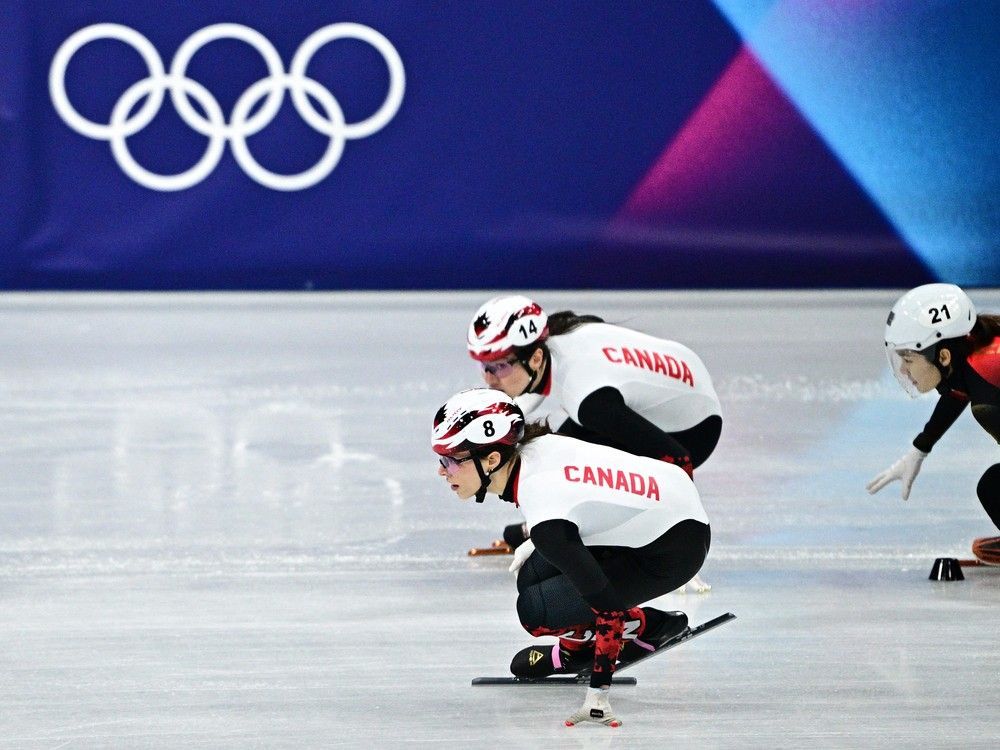
It was a bittersweet but commendable second-place finish for Team Canada after a strong showing in the short-track speedskating mixed team relay at the Milano–Cortina 2026 Winter Olympics.
Canada secured its first silver medal of the Games on Tuesday through a collective effort by William Dandjinou, Courtney Sarault, Kim Boutin and Felix Roussel in the final. Steven Dubois and Florence Brunelle were also recognised for their contributions in earlier rounds leading up to the thrilling final race.
The mixed team relay is regarded as one of the most exciting events in Olympic short-track speedskating. Four skaters per team compete on a tight oval, tagging teammates by pushing them forward to maintain speed. Due to the high pace and congestion on the ice, the event is prone to crashes that can dramatically affect outcomes.
In the final, Canadian skaters adopted a cautious strategy after determining that the ice was soft — a condition that caused several experienced skaters, including Dubois, to crash earlier. Canada hovered between second, third and fourth positions before Dandjinou surged back into second place. However, he was unable to overtake the Italian team, who went on to claim gold. Belgium finished with the bronze medal.
Dandjinou admitted some disappointment afterward, noting that starting further back made it harder to attack for first place.
“Our plan was to attack in the beginning and, if that didn’t work, to stay calm,” he said. “We maybe stayed a bit too calm.”
Head coach Marc Gagnon, a former Olympic champion, defended the team’s tactical decisions, explaining that risky overtaking attempts could have led to crashes and cost Canada a podium finish.
“Our watchword is to never penalize the team,” Gagnon said. “If taking a risk could put the team in danger, you refrain and keep your speed.”
Despite missing out on gold, Gagnon said the silver medal was a strong opening result that sets a positive tone for the rest of the competition.
“If they’re not happy because they finished second, good,” he said. “They’ll try even harder next time.”
The atmosphere at the Milano Ice Skating Arena was electric, with Canadian fans waving flags and cheering loudly. Nicknamed the “Canadian Ice Maples,” the team had been widely tipped as medal contenders following strong performances throughout the season.
Earlier in the day, Canada performed well in qualification rounds. Sarault and Boutin dominated their women’s 500-metre heats, while Brunelle finished second in hers. In the men’s 1,000 metres, Dandjinou and Roussel advanced comfortably, though Dubois fell while attempting an overtake.
In the quarterfinals, Canada narrowly edged China, with Dandjinou making a decisive late move. The team also impressed in the semifinals, with Sarault avoiding a near collision.
Ahead of the final, Gagnon made the difficult decision to exclude Dubois, a three-time Olympic medalist, in favour of Roussel, citing the need for greater agility. Gagnon said Dandjinou helped unite the team following the decision.
“He stood up like a captain and reminded everyone we were in this together,” Gagnon said.
Roussel, competing in his first Olympics and recently recovering from a back injury, delivered a standout performance, even posting a faster 1,000-metre time than Dandjinou.
“It was really emotional to be there,” Roussel said tearfully after the race.
Canada’s silver medal marked a strong start to its short-track campaign, with hopes still high for gold in upcoming events.