
 Adedokun Waliyu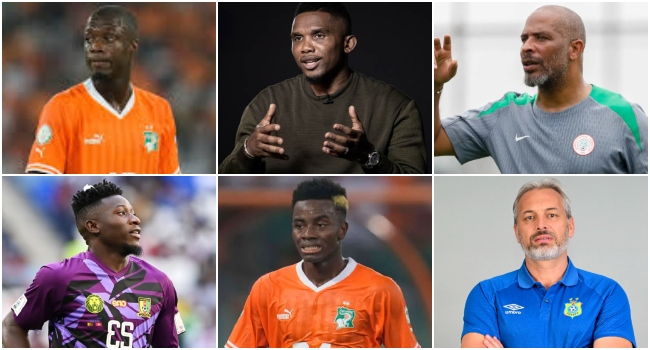
The Africa Cup of Nations (AFCON) has yet to begin, but the competition has already delivered a flurry of controversies that have turned the build-up into one of drama.
From shock squad omissions to internal power struggles, African football’s biggest tournament is once again living up to its reputation for unpredictability.
Here are some of those major controversies:
Pépé, Adingra’s Shock Omission From Ivory Coast Squad
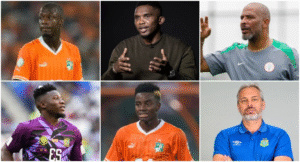
Ivory Coast’s Nicolas Pépé and Simon Adingra
One of the earliest talking points emerged from the Ivory Coast, where Nicolas Pépé and Simon Adingra were surprisingly left out of the national team squad.
Both played a key role in the Elephants’ 2023 AFCON triumph and were widely expected to be part of the title defence.
Coach Emerse Fae, citing reasons for Pepe’s exclusion, said, “If we were to consider only the sporting aspect, he (Pepe) would be with us.
“To make a list, you have to take into account many factors, both on and off the field. All these factors have led to Nico not being on the list.”
Turning to Adingra, Fae said, “Simon is struggling to earn a starting spot at Sunderland. We had to do without his qualities when making our selection.”
Cameroon Selection Disputes, Power Tussle
Brys, Eto’o and Onana
Cameroon’s preparations appear to be the most chaotic of all. The Indomitable Lions made headlines with reports of a deepening rift between the team’s head coach, Marc Brys, and Cameroon Football Federation President Samuel Eto’o.
The conflict reportedly began after goalkeeper André Onana was excluded from the initial squad, prompting Eto’o to intervene and demand his inclusion.
The situation escalated into a public power struggle, with claims that the coach had been dismissed, only for him to deny stepping down. Conflicting reports of squad lists and leadership authority have since emerged, painting a picture of administrative turmoil.
The selection of Arnold Mael Kamdem, a player from the sixth tier of Brazilian football, which is a rare occurrence at the international level, further drew criticism and disbelief.
Nigeria’s Squad Selection Drama
Eric Chelle
Nigeria’s preparations for the AFCON 2025 have been overshadowed by controversy following the announcement of the Super Eagles squad.
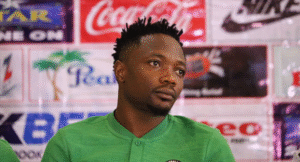
The inclusion of veteran midfielder Muhammed Usman, who has not featured for the national team in over seven years, left fans and pundits questioning the selection criteria.
Meanwhile, rising stars like Crisantus Uche were omitted, sparking accusations of favouritism and raising concerns over whether young talent is being sidelined.
Goalkeeping decisions have also ignited debate. The recall of Francis Uzoho alongside the surprising exclusion of Maduka Okoye has fueled speculation about alleged interference by the Nigeria Football Federation (NFF). The federation, however, has firmly denied any meddling, insisting that all selections were made on merit.
Nigeria’s Football Identity Crisis
After back-to-back failures to qualify for the FIFA World Cup, national pride has taken a hit, leaving fans anxious for redemption.
Beyond on-field performance, the AFCON campaign is increasingly seen as a reflection of Nigeria’s footballing identity and governance. Administrative controversies continue to overshadow the country’s undeniable pool of talent, raising questions about decision-making, management, and the direction of the national team.
For many Nigerians, success at AFCON is not just about lifting the trophy; it is about restoring faith in the systems that govern the sport and reaffirming a national football identity that has long been celebrated across the continent.
DR Congo Foreign-Based Dominated Squad
DR Congo Head coach, Sebastien Desabre
When Sébastien Desabre revealed his 26-man squad for DR Congo’s AFCON 2025, fans were surprised to discover that only one home-based player, Fiston Mayele, was selected, with the rest of the squad comprised of European-based players, meaning no local stars from clubs like TP Mazembe or AS Vita made the final cut
According to Desabre, ”the key is professionalism”.
“Professionalising the structure around the national team, instilling discipline and real game rigour.”
”The organisation of the national team is top-level, and you can see it on the pitch,” the French manager added..