Brazil’s Embraer Criticizes New US Tariffs, Warns Of Air Travel Inflation
 Adedokun Waliyu
3 min read
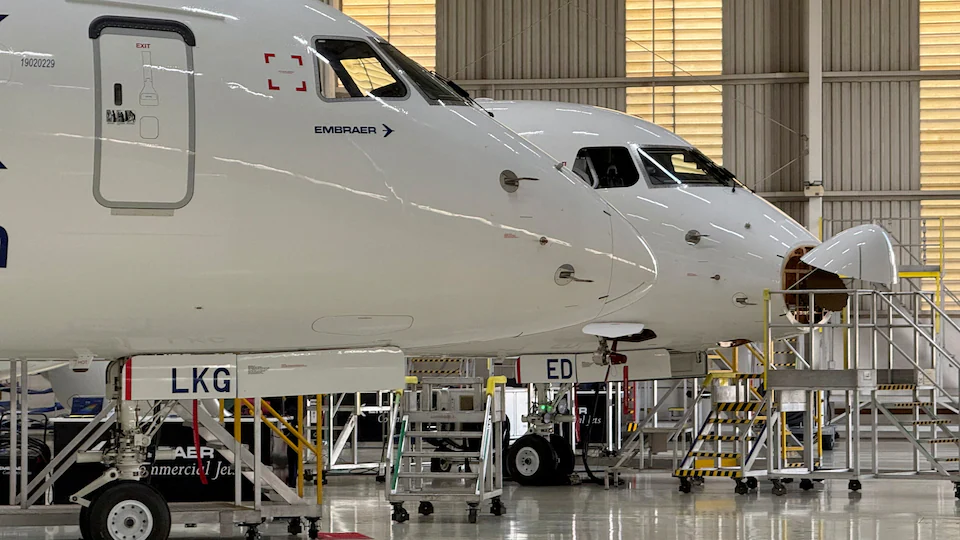
Embraer (EMBJ3.SA) warned on Thursday that Washington’s proposed 10% tariff on aircraft imports from Brazil could drive up US airline costs and airfares, as the Brazilian planemaker prepared to lobby against the measure.
The proposal, unveiled by the Trump administration on Wednesday as part of a broader tariff package, surprised Embraer, and follows an earlier round of US duties on Brazilian aircraft.
Aerospace as an industry has largely escaped US President Donald Trump’s tariffs, compared with other sectors like autos and steel, reflecting the sector’s global supply chains and importance to the US economy.
The United States, the world’s largest market for private planes, is also a key buyer of Embraer’s regional E175 jet, which has no US-made competitor and is critical for regional routes that attract fewer passengers.
US clients buy around half of Embraer’s commercial airliners and 70% of its executive jets, all of which rely on many US parts. Analysts have said 60% of Embraer’s revenue is from North America.
The E175, which typically seats around 76, is the most-flown aircraft in the United States and more than 40% of its content is sourced from US companies, Embraer CEO Francisco Gomes Neto told reporters in Brasilia.
“Imposing a tariff on that aircraft would penalize airlines, which would pay more for the plane. That would probably be reflected in ticket prices and could even contribute to inflation,” he said.
“We were caught off guard because everything was going well.”
Trump has often clashed with Brazil’s leftist President Luiz Inacio Lula da Silva, who weeks ago beat his right-wing rival, Flavio Bolsonaro, in presidential elections to secure an unprecedented fourth term, a result that Trump said “looked rigged”.
Embraer previously faced a 10% US duty from 2025 until early 2026, when Washington restored duty-free access for Brazilian aircraft. Embraer argues it has $3.5 billion in assets and more than 2,500 employees across the US.
Tariffs on aircraft often end up hurting domestic airlines and suppliers as much as foreign manufacturers, according to analysts and industry executives.
Embraer will seek support from US industry contacts and policymakers while also relying on the Brazilian government to help defend the company’s case, Gomes Neto said.
The CEO met on Thursday with Brazil’s Vice President Geraldo Alckmin, who leads the country’s trade negotiations with Washington. Alckmin called the proposal “completely unreasonable” and said Brasilia would work to reverse it.
“It’s tradition not to have tariffs in a sector as strategic as aerospace,” Alckmin told reporters.
Since a final decision on the proposed tariffs is not expected until next year, Gomes Neto said they would have no impact on Embraer’s 2026 delivery plans.
Questions remain over whether the duty would apply to Embraer’s Praetor business jet, which depends heavily on the United States as its largest market.
The Praetor is shipped to the US in an advanced stage of production and completed at the company’s Florida facilities, with all deliveries made from the US, Gomes Neto said.
“We need to understand exactly what this new tariff would cover. We still don’t have that clarity,” he said.
Sao Paulo-traded shares in the company fell as much as 9.6% on Wednesday, but were up 1.3% on Thursday.