Myanmar Calls UN Court’s Rohingya Genocide Ruling A ‘Great Disappointment’
 Adedokun Waliyu
3 min read
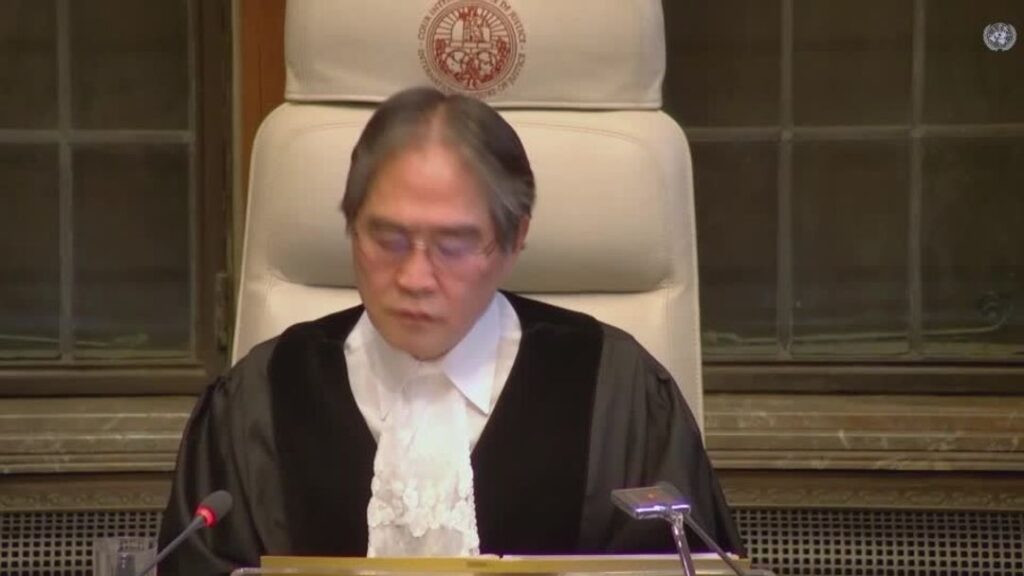
Myanmar on Friday criticised a UN court ruling that its security forces conducted state-sponsored genocide against the Rohingya and said refugees from the mainly Muslim minority would only be able to return “when situations permit”.
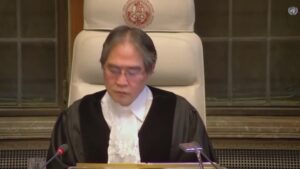
The International Court of Justice on Thursday found that Myanmar’s military killed Rohingya civilians, committed sexual violence on a large scale, unleashed extreme violence against children and attacked fleeing people in Rakhine State in 2017.
It was the fourth time since the Nazi Holocaust that an international court ruled that the legal threshold to prove genocide had been met but the first instance of the court holding a state responsible for the crime.
“This finding comes as a great disappointment to Myanmar,” the foreign ministry said in a statement late on Friday. “It should be noted that the judgment of the court was delivered with dissenting opinions and was therefore not decided unanimously.”
While rulings by the ICJ, which settles disputes between states and rules on alleged breaches of international treaties, are final, the court has very limited options to enforce them.
Long persecuted in Buddhist-majority Myanmar, about 750,000 Rohingya escaped the 2017 military crackdown that was central to the genocide case and sought refuge in Bangladesh, where the number of refugees in densely packed camps has now swelled to 1.2 million.
Before the exodus, some 1.1 million Rohingya people lived in Myanmar but only around 600,000 remain in Rakhine State, including 140,000 living inside displacement camps, according to multiple estimates.
Judges found that Myanmar’s military carried out mass executions of men and boys, committed widespread rape and sexual violence against Rohingya women and burned or razed hundreds of villages during so-called clearance operations.
In its statement, Myanmar’s foreign ministry said that Gambia, which brought the case to the court, as well as reports referenced in the hearing did not describe the military’s actions accurately.
“…the counter-terrorism actions conducted in northern Rakhine State during 2016-2018 were not carried out with genocidal intent but instead were limited in scope and duration, lasting only a matter of days, and were undertaken in direct response to widespread terrorist attacks,” it said.
The court’s 191-page judgment referenced a Reuters investigation into the killing of 10 Rohingya Muslims in Inn Din in September 2017, and the subsequent arrest of two Reuters reporters, who were held for more than 500 days.
The ICJ also ruled that Myanmar had an obligation to compensate the Rohingya for the violations it had committed, to be determined later, and it must also allow the safe return of Rohingya displaced as a result of Myanmar’s “wrongful acts”.
Myanmar will continue humanitarian assistance and rehabilitation for displaced persons in northern Rakhine as well as the verification and repatriation of those in Bangladesh “as and when situations permit”, the foreign ministry said.
“The international community should view the difficulties and challenges facing Myanmar objectively and play a constructive role in easing the situation while respecting Myanmar’s sovereignty, independence, and territorial integrity,” it said.
Myanmar has been in turmoil since 2021 when the military ousted an elected government led by Nobel laureate Aung San Suu Kyi, triggering a civil war that has also led to fierce fighting in Rakhine, complicating any possible return for the Rohingya.
In August, Myanmar’s military-backed government said that it had verified 308,797 people living in camps in Bangladesh as former residents of Rakhine, but repatriation would begin only when security conditions improve.
Myanmar has long described the Rohingya as illegal migrants from neighbouring Bangladesh and denied them citizenship, even though Rohingya families have lived in Myanmar for generations.