
 Adedokun Waliyu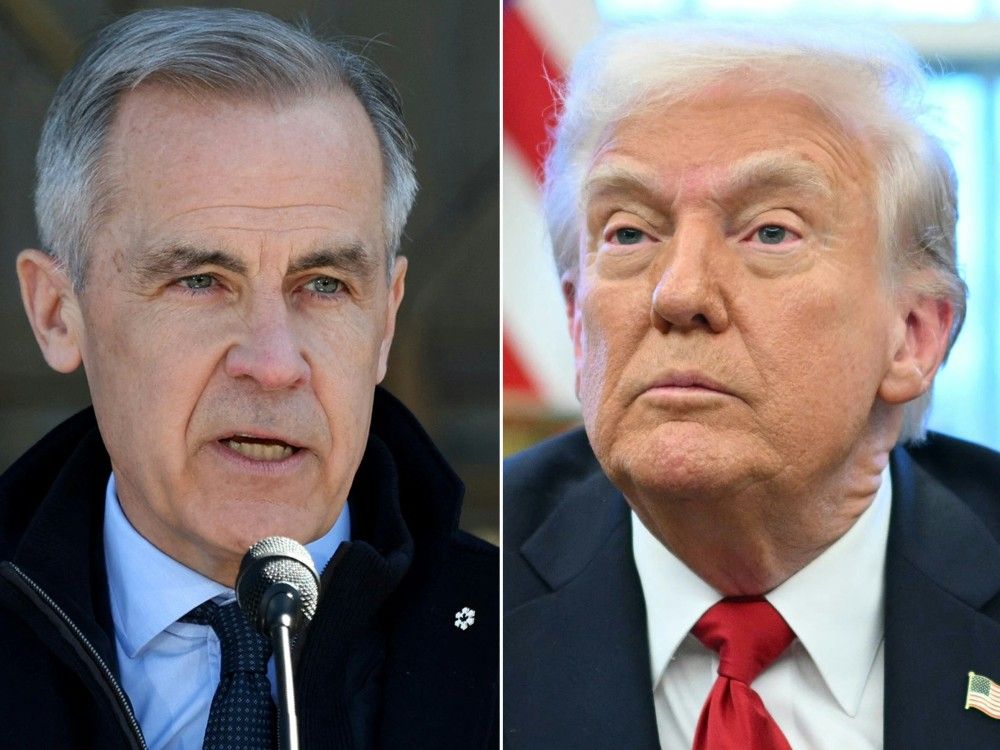
US President Donald Trump has renewed his criticism of Canada as the country prepares for a potentially damaging trade conflict with the United States, while Prime Minister Mark Carney’s government is rolling out financial support programmes for workers and businesses affected by tariffs.
Trump, in a post on Truth Social, said Canada wanted the benefits of being a US state without actually becoming one.
“Canada wants the benefits of being a State, without being one!!! They have also charged our great farmers, for many years, massive amounts of Tariffs. No more!!!” Trump wrote.
The remarks came after trade negotiations between Canada and the United States ended without an agreement.
Carney, meanwhile, has vowed to reduce Canada’s dependence on the United States and diversify the country’s trading relationships.
“For much of our history, Canadians have been able to count on favourable trade conditions: a stable relationship with the United States, increasingly open access to the U.S. market, and rules that both countries understood and respected,” Carney said.
He said the situation had changed and Canada could no longer rely on the previous trading relationship.
“We cannot control the storm blowing in from Washington,” Carney said. “We can chart a new course by building Canada strong at home and diversifying our trading relationships abroad. We are masters in our own home and the partner of choice abroad.”
$25bn Support for Workers and Businesses
As Canada prepares for the economic impact of the trade dispute, Carney said the federal government would provide $25 billion to protect Canadian workers and businesses affected by US tariffs.
The government is also preparing measures aimed at helping small and medium-sized businesses invest in equipment, improve productivity and strengthen supply chains.
Other measures are expected to provide financing to help large employers continue operating and retain workers, while industries severely affected by tariffs will receive assistance to retool and seek new international markets.
The government has also been promoting a range of existing programmes designed to support workers and businesses affected by tariffs.
These include Labour Market Development Agreements, skills and employment training for Indigenous people, Canada Student Grants and Loans, the Repayment Assistance Plan, the Canada Apprentice Loan and various tax deductions and credits.
Other programmes include Employment Insurance for apprentices, the Work-Sharing Program, the Student Work Placement Program, the Worker Retention Grant and the Regional Tariff Response Initiative.
The Regional Tariff Response Initiative provides financial assistance to small and medium-sized businesses affected by tariffs, while the Strategic Response Fund supports innovative projects in sectors affected by US tariffs.
The government has also introduced the Large Enterprise Tariff Loan programme to support large Canadian businesses affected by current and future tariffs and countermeasures.
Additional assistance includes tax relief and support for industries such as steel and forestry, as well as loans, grants and other programmes aimed at helping Canadian businesses expand into new international markets.
Ontario Premier Doug Ford said Saturday that the government must support affected sectors and reiterated that Canadians know their government is there for them.
The developments suggest that Canadian businesses and workers could face significant changes as the trade dispute escalates, with the federal government increasingly positioning itself as a source of financial support as Canada seeks to reduce its economic reliance on the United States.