 Adedokun Waliyu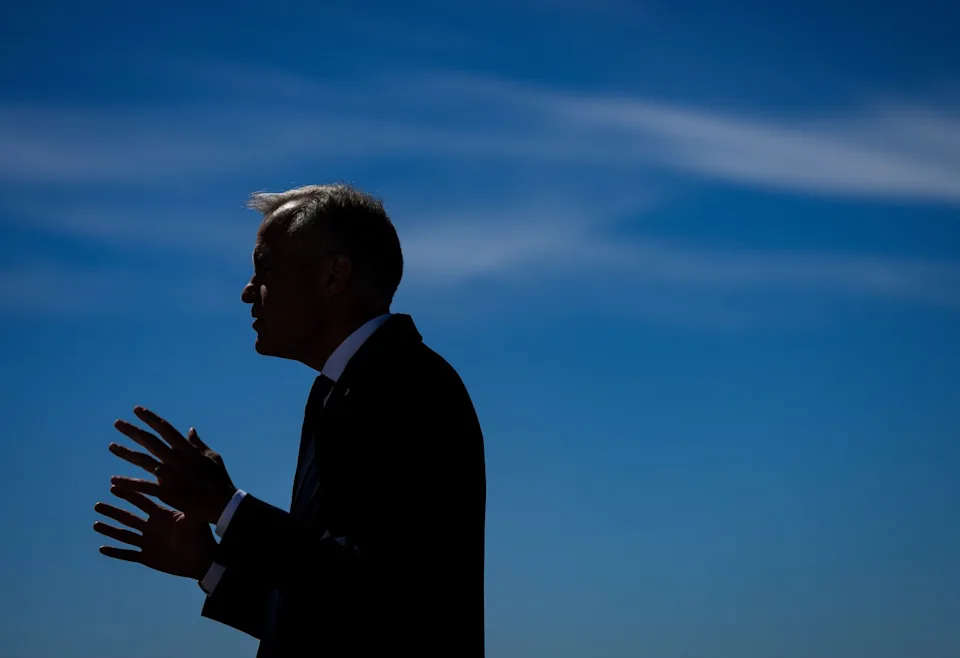
Here are the latest developments on the trade negotiations between Canada and the United States:
The Chamber of Marine Commerce says the new tariffs will cause “significant challenges” for companies on both sides of the border supported by the in-line marine supply chain.
An example of a vital commodity impacted by the new tariffs would be Canadian salt used to maintain road safety in winter conditions. The new tariffs will negatively impact municipalities throughout the United States who have relied on this critical commodity for years, as it can be expected to increase costs and place significant pressure on municipal budgets and operations.
“The Chamber of Marine Commerce will be highlighting for both federal governments the negative outcomes that arise when tariffs are applied on the vital cargoes that underpin the functioning of society.”
Conservative Leader Pierre Poilievre says they are disappointed that the United States has chosen to impose “further unjustified tariffs on Canada” which will threaten the jobs and livelihoods of families across the country.
“Canada cannot accept one-sided tariffs that will deindustrialize our country. Nor can we accept a bad deal. Instead, we must continue the fight for tariff-free trade.”
Poilievre went on to call for urgent economic reforms, including “ending the industrial carbon tax, repealing anti-development laws, green lighting the 500 economic projects awaiting federal approval and major tax reforms to return investment to our country, reward work, and recharge our economy.”
Prime Minister Mark Carney is set to speak to reporters this morning after a last-ditch effort to reach a new trade deal before a midnight tariff deadline failed Friday.
A press conference is scheduled to take place on Parliament Hill at around 11 a.m.
Carney has since suspended talks with the United States and summoned his negotiators back to Ottawa.
The decision meant new 50 per cent tariffs on billions of dollars in Canadian exports to the U.S. took effect at 12:01 a.m., and Carney vowed Canada would retaliate with equal measures of its own.
Carney also said the government will introduce measures to support Canadian workers and businesses in the coming days.
The new U.S. tariffs target $28 billion in Canadian goods ranging from hockey sticks and honey to essential oils and dairy products.
The premier of Quebec is calling on Canada to help businesses and workers in her province affected by the tariffs imposed by the United States government.
In a statement, Christine Fréchette says she is convening her cabinet this morning to implement measures to help affected businesses and workers.
She says the tariffs are hitting businesses in every region of Quebec.
Fréchette says her priority is to defend Quebec’s interests and protect its economy.
Federal NDP Leader Avi Lewis says Prime Minister Mark Carney was right to walk away from trade talks with United States President Donald Trump.
He says Carney correctly read the room when he rejected the U.S. government’s offer.
Lewis says Carney would have locked in destructive tariffs and undermined Canada’s ability to regulate big tech companies if he had taken the American government’s offer.
He says Trump is weak and cannot be trusted to abide by any agreement.
Ontario Premier Doug Ford says the prime minister has his full support for a strong response, urging “tariff for tariff, dollar for dollar.”
“Team Canada needs to stand together more united than ever before. As we fight to protect Canadian sovereignty and economic security, everything needs to be on the table. Ontario is ready to do its part.”
B.C. Premier David Eby says British Columbians will always stand with Canada.
“Our politeness should never be mistaken for weakness. We’ll always defend ourselves. We didn’t ask for this, but we’ll keep fighting for as long as it takes.”
Alberta Premier Danielle Smith said she was “deeply disappointed” the two sides couldn’t reach an agreement, adding she has always advoked for a tariff-free relationship.
“Tariffs and counter-tariffs hurt businesses, workers and families on both sides of the border, while weakening one of the most important economic and security relationships in the world.”
“I welcome the federal government’s intention to provide relief for those businesses that are impacted. Alberta will continue to advocate for a strong tariff-free relationship between Canada and the U.S., and I will be urging the federal government to restart negotiations as soon as possible.”
Prince Edward Island Premier Rob Lantz called on leaders to hold fast to the Team Canada approach to tariffs.
Lantz vowed in a social media post to keep working with premiers and the Canadian government to stand up for Canadian interests.
He said he will make sure P.E.I. has a strong voice in the next steps, and he vowed to stand with Island workers, businesses and exporters.
New Brunswick Premier Susan Holt is calling on people in her province to double down on their efforts to buy local and support local producers. Holt says some businesses have now been hit with the steep new tariffs, which she described as unjustified.
She says the tariffs will hurt families, jobs and her province’s economy.
In a statement, Holt says she stands with Team Canada as the country fights for a fair deal.