
 Adedokun Waliyu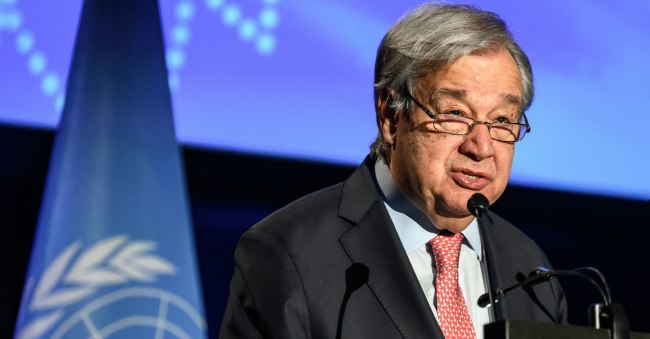
Global foreign direct investment (FDI) increased in 2025 after two consecutive years of decline, according to a new report released by the United Nations Trade and Development (UNCTAD). The report, however, cautioned that the recovery remains narrow, fragile and uneven across countries, regions and sectors.
Foreign direct investment rose by 6.0 per cent to reach $1.6 trillion in 2025. Despite this growth, the report noted that the increase was heavily concentrated, with just 20 countries attracting more than 80 per cent of global FDI. Investment growth was also limited to a few sectors, while activity in most industries remained subdued due to investor uncertainty, geopolitical tensions, trade policy volatility, rising borrowing costs and increasing technological competition.
In the report’s preface, United Nations Secretary-General Antonio Guterres warned that the apparent recovery masks significant weaknesses and disparities. He described the current global investment environment as undergoing major structural changes, with much of the expansion driven by a small number of large-scale projects, particularly infrastructure supporting artificial intelligence.
UNCTAD found that data centres accounted for the largest share of growth in project values, followed by investments in oil and gas and semiconductors. Most other sectors, including renewable energy, infrastructure and manufacturing, experienced declines, highlighting the limited breadth of the recovery.
The report also showed that developed economies benefited the most from the increase in investment. FDI inflows into developed countries rose by 11 per cent, while developing economies recorded only a two per cent increase, receiving a combined total of $901 billion. Although developing countries continued to account for more than half of global FDI, the distribution remained uneven.
Developing Asia remained the largest recipient region with $644 billion in inflows. Latin America and the Caribbean attracted $188 billion, representing a 14 per cent increase, while Africa received approximately $70 billion. The world’s least developed countries recorded a 21 per cent rise in FDI to $43 billion. However, this represented only 2.7 per cent of global investment, with most of the inflows concentrated in a small number of resource-rich economies.
UNCTAD also reported that governments became increasingly active in shaping investment flows, introducing a record 229 investment policy measures in 2025. While many of these policies remained favourable to investors, they were increasingly designed to attract investment into strategic industries, strengthen domestic economic priorities and address national economic security concerns.
The report concluded that the changing investment landscape presents both opportunities and challenges. While new trends could benefit developing countries, many risk being left behind as global investment becomes more capital-intensive, technology-driven and influenced by policy support that many developing economies cannot easily provide.