
Nigeria’s FG Approves NYSC Reform, Agency To Be Civilian-Led, Skill-Oriented
 Adedokun Waliyu
3 min read
Adedokun Waliyu
3 min read
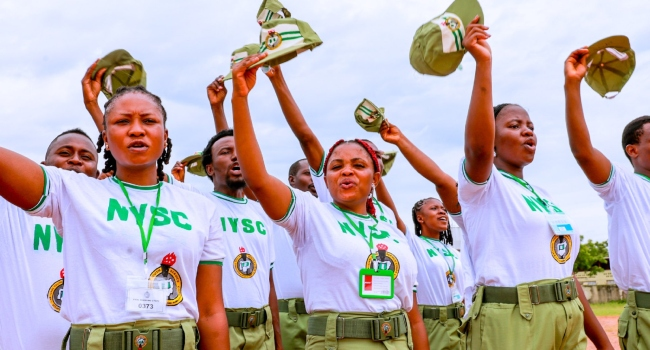
One of Nigeria’s most enduring national institutions, the National Youth Service Corps (NYSC), is entering a new era as the Federal Executive Council (FEC) has approved a holistic reform of the agency. This marks the first review of the NYSC in its 53-year history.
As part of the approval, the Federal Executive Council directed the Attorney-General of the Federation and the Ministry of Youth to amend the NYSC Act and its regulations to reflect all the approved reform measures, enabling the immediate implementation of the new framework.
Under the reform, the NYSC will be led by a civilian in its operational leadership, while the military will continue to provide security for corps members across the country. This shift is intended to reposition the NYSC as a skill-oriented, productivity-driven and youth-empowering institution that directly supports the administration’s ambition of building a one-trillion-dollar economy.
Speaking on the reform, the Special Adviser to the President on Policy Coordination, Hadiza Bala Usman, said there was a need to reposition the NYSC as a civilian-led, skill-oriented, productivity-driven and youth-empowering national institution. She explained that the reforms are aimed at strengthening human capital development in order to build the workforce needed to drive the country’s national development.
She stated that the reform covers every strategic aspect of the NYSC, beginning with the registration process, the method of posting corps members to different states, the consideration of security challenges in deployment, and the structure and duration of the orientation camp.
According to her, the government also examined how to recognise graduates’ individual skills and align them with the nation’s needs. As a result, the NYSC has been divided into eleven different core streams to provide specialised training for corps members based on their interests, academic backgrounds and skill profiles.
Under the new orientation camp structure, the first two weeks will focus on laying a foundation in civic responsibility, national values and leadership development. The following two weeks will concentrate on career mapping, basic accounting and financial literacy, business planning, access to finance and a structured Career Day programme that will allow corps members to interact directly with employers and the public. The final two weeks will be dedicated to specialised training based on each corps member’s chosen stream.
The eleven core streams are Agric Corps, Medical Corps, Education Corps, Tech and Digital Corps, Legal Corps, Public Service Corps, Infrastructure Corps, Green Corps, Enterprise Corps, Creative Economy Corps, and Paramilitary and Security Corps.
Bala Usman explained that once graduates are accepted into the NYSC programme, they will be required to choose one of the designated streams. They will then receive specialised training related to their selected field during the final phase of the orientation programme.
She described the reform as a bold step by President Bola Tinubu, noting that it is the first comprehensive reform of the NYSC since its establishment over five decades ago. She added that the new civilian-led structure is designed to equip young Nigerians with practical skills that will enable them to contribute meaningfully to national development and support the government’s goal of building a one-trillion-dollar economy.
The National Youth Service Corps was established by Decree No. 24 of 22 May 1973 to reconstruct, reconcile and rebuild Nigeria after the Civil War by encouraging unity and strengthening the bonds among young Nigerians. The scheme is currently headed by Brigadier General Olakunle Nafiu.