
A Lifeline Home: Nigeria Steps Up Diaspora Protection As More Citizens Return From South Africa
 Adedokun Waliyu
3 min read
Adedokun Waliyu
3 min read
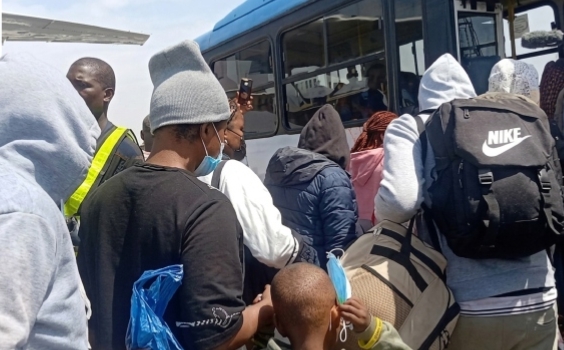
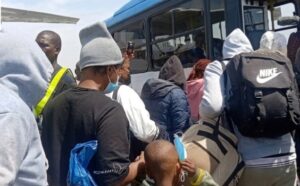
The second batch of Nigerian evacuees from South Africa arrived at the Murtala Muhammed International Airport (MMIA) in Lagos on the night of June 24, 2026, as part of the Federal Government’s ongoing evacuation programme following renewed anti-immigrant tensions in South Africa.
The group of 66 returnees arrived at about 8:50 p.m. after an evacuation exercise approved by President Bola Tinubu. The operation was facilitated by the Nigerians in Diaspora Commission (NiDCOM) and supported by Value Jet Chairman and Chief Executive Officer, Otunba Kunle Soname, who provided transportation for the returnees.
Officials of the Nigerian High Commission in South Africa accompanied the evacuees, highlighting the diplomatic coordination behind the exercise.
Upon arrival, the returnees expressed appreciation to President Tinubu for approving the evacuation. They also thanked Kunle Soname, Acting Nigerian High Commissioner to South Africa Ambassador Temitope Ajayi, NiDCOM Chairman Abike Dabiri-Erewa, the National Emergency Management Agency (NEMA), the National Commission for Refugees, Migration and Internally Displaced Persons, the Federal Airports Authority of Nigeria (FAAN), the Nigeria Immigration Service (NIS), and other agencies involved in the operation.
Speaking on behalf of the NiDCOM Chairman, Dipo Onabowale praised the President for making the evacuation possible and disclosed that the Minister of Foreign Affairs, Bianca Odumegwu-Ojukwu, was addressing logistical challenges experienced during the first phase of the operation. He assured that all registered Nigerians would be evacuated.
Support for Returnees
The government and private organisations also provided support to help the returnees reintegrate.
Imo State indigenes among the returnees received ₦1 million each through the support of Governor Hope Uzodinma.
MTN Nigeria provided free SIM packs containing data worth ₦50,000 and credited ₦100,000 to each returnee’s bank account.
Pastor Bolaji Idowu of Harvesters International Christian Centre donated ₦100,000 to each returnee.
Government agencies, including NEMA, the Refugee Commission, NIS, FAAN, and security agencies, handled documentation, profiling, and immediate assistance at the airport.
The beneficiaries described the support as proof that Nigerians abroad had not been forgotten and thanked the government and donors for their assistance.
First Evacuation
The first evacuation flight took place on June 11, 2026, when 258 Nigerians returned home aboard an Air Peace aircraft.
The returnees were received by senior government officials, including the Minister of State for Foreign Affairs, Sola Enikanolaiye, alongside representatives of the Nigerian High Commission in South Africa led by Acting High Commissioner Temitope Ajayi.
The minister assured Nigerians that the Federal Government would continue the evacuation until all registered citizens who wished to return had been brought home safely.
The programme is expected to benefit more than 1,000 Nigerians following registration and screening by the Nigerian High Commission in Pretoria. Returnees will undergo documentation, profiling, medical checks, and temporary accommodation before reuniting with their families.
Anti-Migrant Hostility
The evacuation followed a fresh wave of xenophobic attacks and anti-immigrant hostility targeting black foreign nationals in parts of South Africa.
Groups armed with sticks, whips, and shields reportedly marched through communities demanding that undocumented foreigners leave the country by June 30. Many foreign nationals reported intimidation, assaults, and forced displacement, prompting several to return voluntarily to their home countries.
Other African nations, including Ghana, Mozambique, and Malawi, have also organised evacuation programmes for their citizens.
The Nigerian government has continued diplomatic engagement with South African authorities while monitoring the situation. Foreign Affairs Minister Bianca Odumegwu-Ojukwu stated that stronger measures against South Africa were being considered and stressed that retaliation was “not off the table.”
The attacks have also prompted calls for Nigerians to focus on rebuilding their country. Inter-Party Advisory Council (IPAC) Chairman and Allied People’s Movement (APM) National Chairman, Yusuf Dantalle, described the attacks as a wake-up call for Nigerians to strengthen their nation.
Former Nigerian Ambassador to Switzerland, Joseph Ayalogu, urged African governments to seek compensation for victims who lost businesses and investments during the unrest.
Meanwhile, South African authorities have appealed for calm. Zulu King Misuzulu kaZwelithini called for peace and urged his people not to attack anyone, while Acting Police Minister Firoz Cachalia announced increased security measures to maintain law and order.
For the hundreds of Nigerians who have already returned—and the many more expected in the coming days—the evacuation programme represents more than transportation. It reflects the Federal Government’s commitment to protecting Nigerians abroad and providing support when their safety is threatened.