
 Adedokun Waliyu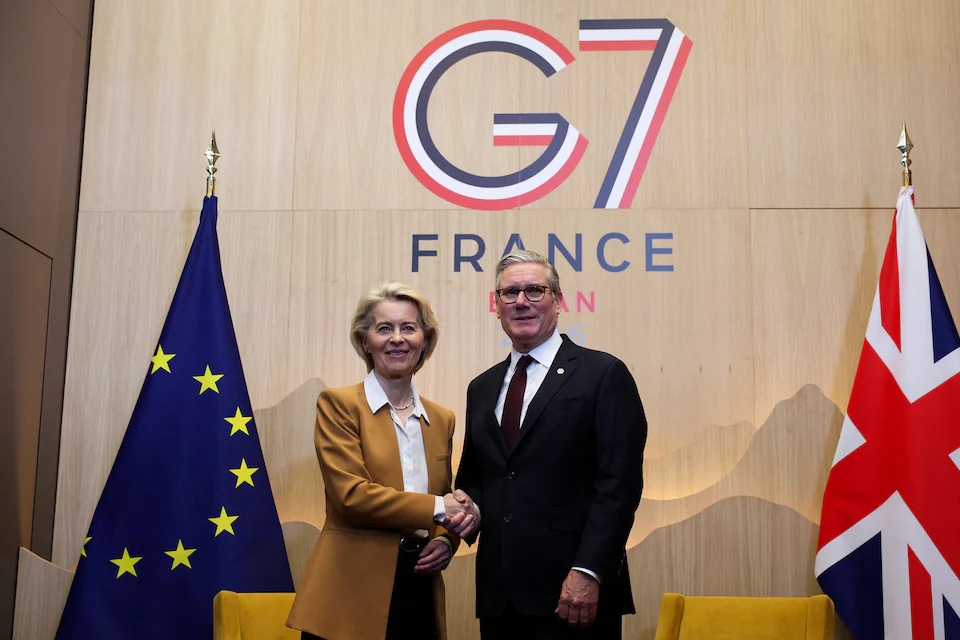
Outgoing British Prime Minister Keir Starmer announced his departure on Monday amid plunging approval ratings, but there were warm words from European leaders who had generally found him easier to work with than his recent predecessors.
Starmer, the first non-Conservative prime minister since Britain voted to leave the European Union, rejected suggestions that it could rejoin the 27-member bloc, but he had pushed to improve relations after the trauma of Brexit.
He also kept up Britain’s central role in the region’s support for Ukraine, alongside his fellow “E3” leaders, French President Emmanuel Macron and German Chancellor Friedrich Merz.
“It can take many leaders years to grow into the statesman you became in just two years,” European Commission President Ursula von der Leyen said on the social media platform X. “European and Ukrainian security is stronger because of you. Thank you, dear Keir.”
Starmer came to office in 2024, sweeping aside a deeply unpopular government that presided over a slumping economy and a nation still divided by the bitter Brexit referendum campaign.
But like other European leaders, Starmer struggled to win over voters disillusioned with mainstream parties and increasingly drawn to insurgent anti-establishment parties that promised to shake up politics with bold measures.
Away from home, his perceived lack of charisma appeared to matter less than it did at home, where he was frequently accused of lacking conviction.
“I want to acknowledge the significant role Keir played in resetting the Irish-British relationship as well as relations between the UK and the European Union during his time as prime minister,” Irish Prime Minister Micheál Martin said in a statement.
Starmer’s support for Ukraine maintained the line followed by Conservative predecessors such as Boris Johnson who threw London’s support behind Ukrainian President Volodymyr Zelenskiy after Russia’s assault on Kyiv in 2022.
Zelenskiy thanked Starmer “for always being in touch, always engaged, and always striving to do what is needed” and said their conversations had always been “filled with real substance”.
“Keir, you are always a welcome guest in Ukraine,” he said on X.
A German government spokesperson said Starmer had always been “a reliable and close partner”.
However, there was no immediate personal statement from Merz, himself struggling with record-low ratings that have prompted press speculation about his own future.
Across the Atlantic, the farewell was less warm.
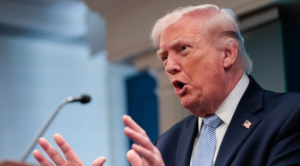
U.S. President Donald Trump offered a dismissive send-off, announcing a day before the resignation that Starmer would leave, and saying he had “failed badly” on the key issues of immigration and energy, where Trump disagrees sharply with British government policy.
Russia, which considers Britain one of its main enemies, not least for supporting Ukraine, claimed credit for Starmer’s departure through a post on X by Russian President Vladimir Putin’s special envoy Kirill Dmitriev.
“We did this jointly,” it read, “by exposing Starmer’s warmongering and consistently wrong policies on immigration, crime, energy and economy.”