
 Adedokun Waliyu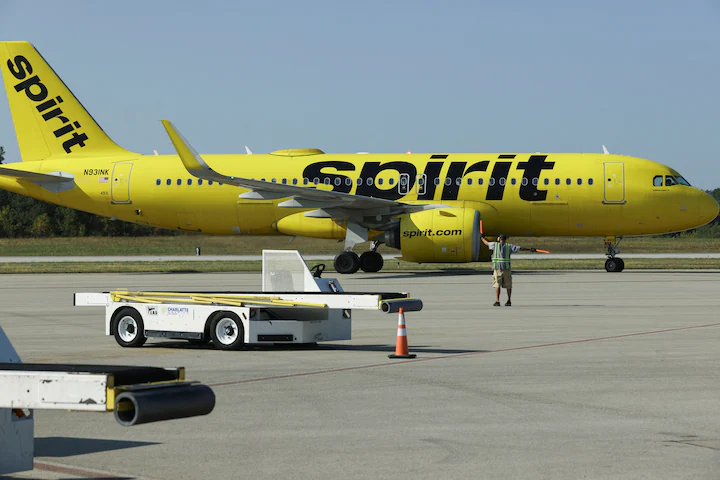
The Trump administration is in talks about rescuing low-cost carrier Spirit Airlines that is struggling to exit bankruptcy, sources told Reuters.
The U.S. government is set to lend Spirit as much as $500 million in exchange for warrants to take a potential stake in the carrier, the Wall Street Journal reported.
A source familiar with the matter told Reuters Spirit and the federal government are in advanced discussions about the terms of a financing package and hope to finalize it imminently. A second source also said the U.S. government could get a significant equity stake as part of any rescue.
It is unclear what loan authority the Trump administration would tap.
President Donald Trump told CNBC on Tuesday that he would like someone to acquire Spirit and said it was possible that the federal government could get involved, the latest example of the Trump administration’s intervention in public companies.
The Commerce and Transportation departments declined to comment.
White House spokesperson Kush Desai said the Trump administration continues to monitor the situation and overall health of the U.S. aviation industry but declined to confirm the talks.
Desai added that Spirit would have a “much firmer financial footing” had the Biden administration not blocked its merger with JetBlue (JBLU.O), opens new tab.
Global carriers are contending with surging jet fuel prices after U.S.-Israeli strikes on Iran disrupted traffic through the Strait of Hormuz. Spirit has said it plans to shrink its fleet to about one-third of its pre-bankruptcy size, retaining roughly 76 to 80 aircraft by the third quarter of 2026.
The carrier built its turnaround plan based on fuel costs averaging about $2.24 per gallon in 2026 and $2.14 in 2027, according to its March disclosures. By mid-April, jet fuel prices were around $4.24 a gallon, roughly double the level assumed in its projections.
United Airlines’ CEO Scott Kirby said he was not sure about the outcome of the government’s bailout for Spirit.
Kirby called Spirit’s business model fundamentally flawed and said it was not going to be able to make it or cover cash operating costs.
Spirit, best known for its bright yellow all-Airbus fleet, built its brand around affordable fares for budget-conscious travelers ready to eschew add-ons such as checked bags and seat assignments.
Spirit declined to comment on the matter but said it was operating normally.
U.S. Transportation Secretary Sean Duffy on Tuesday raised concerns about using government funds to rescue low-cost bankrupt airline Spirit Airlines.
“What we don’t want to do is put good money after bad, and there’s been a lot of money thrown at Spirit, and they haven’t found their way into profitability. And so would we just forestall the inevitable and then own that?” Duffy said in a Reuters interview. “Or does Spirit have some pathway to make it, and I don’t know the answer to that.”
Duffy said it appears no one wants to buy Spirit. “What would someone buy?” Duffy asked. “If no one else wants to buy them, why would we buy them?”
Duffy told Reuters the high jet fuel prices were prompting talks among airlines.
“This is prompting some greater debate and conversation about what should happen.”
“If you do do Spirit, who comes next? Who is the third?” Duffy added: “If Spirit goes away, it’s better for JetBlue. If we bail out Spirit, I can’t imagine that JetBlue would love that.”
Duffy noted JetBlue had financial problems before the fuel-price crisis.