 Adedokun Waliyu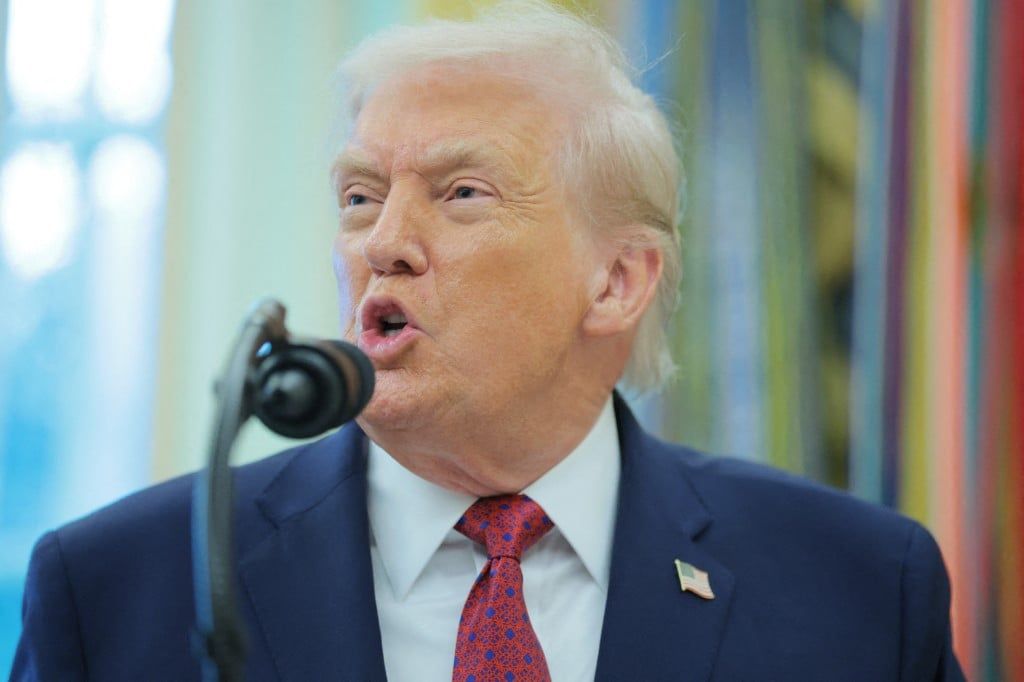
US President Donald Trump announced Friday that he canceled a planned second wave of military attacks on Venezuela after the government began releasing political prisoners.
Trump made these comments while preparing to meet with major oil corporations expected to invest at least $100 billion in Venezuela, which holds the world’s largest oil reserves.
Prisoners Released as Peace Gesture
Venezuela started releasing prisoners on Thursday, marking the first such gesture since US forces removed and detained President Nicolas Maduro in a deadly January 3 raid. Deputy Delcy Rodriguez has since taken over leadership.
“Venezuela is releasing large numbers of political prisoners as a sign of ‘Seeking Peace,'” Trump wrote on his Truth Social platform. “Because of this cooperation, I have cancelled the previously expected second Wave of Attacks.”
Among those freed was former Venezuelan opposition candidate Enrique Marquez, who opposed Maduro in the contested 2024 presidential election. “It’s all over now,” Marquez said in a video alongside his wife and another released opposition member, Biagio Pilieri.
Meeting with Opposition Leader
Trump indicated he would meet next week with Venezuelan opposition leader Maria Corina Machado, whom he previously described as a “very nice woman” lacking the “respect” to lead Venezuela.
“I understand she’s coming in next week sometime, and I look forward to saying hello to her,” Trump told Fox News host Sean Hannity.
Scale of Releases
Interim leader Rodriguez’s brother, parliament speaker Jorge Rodriguez, said “a large number of Venezuelan and foreign nationals” were being immediately freed for the sake of “peaceful coexistence.”
Notable releases included:
Spanish-Venezuelan activist Rocio San Miguel and four other Spanish citizens
San Miguel had been imprisoned since February 2024 over an alleged assassination plot against Maduro, which she denied
Venezuelan rights NGO Foro Penal estimates over 800 political prisoners remain in the country’s jails.
Ongoing US Control
The initial raid that removed Maduro involved special forces and airstrikes, leaving 100 people dead according to Caracas. US forces transported Maduro and his wife, Cilia Flores, to New York to face drug charges.
Trump has stated the United States would “run” the Caribbean country during a transitional period and exploit its oil reserves. Earlier this week, Trump announced plans to sell between 30 million and 50 million barrels of Venezuelan crude, with proceeds used to purchase US-made products.
On Friday, the United States also seized another tanker near Venezuela as part of its oil embargo enforcement.
Venezuelan Response
Despite the prisoner releases, Delcy Rodriguez insisted Thursday that Venezuela was “not subordinate or subjugated.”
“Nobody surrendered. There was fighting for the homeland” when US forces attacked, she said during a ceremony honoring Venezuelans killed in the operation.
Public opinion in Caracas remains divided. Jose Antonio Blanco, 26, said: “I feel we’ll have more opportunities if the oil is in the hands of the United States than in the hands of the government.”