 Adedokun Waliyu
As Canada taps the brakes on its contentious EV sales mandates, concerns are being raised over penalties for automakers who don’t meet quotas.
Automakers who don’t meet mandated minimum sales targets for emission-free vehicles — which according to policy was 20% of new car sales in the 2026 model year, eventually increasing to 100% by 2035 — must either pay a $20,000 penalty per vehicle or purchase credits from carmakers who have a surplus.
“The only manufacturer that would have a surplus of credits is Tesla, because all they do is sell electric vehicles,” Brian Kingston, Canadian Vehicle Manufacturers’ Association (CVMA) CEO, told the Sun.
“A manufacturer has to enter into an agreement with them to purchase credits to help them meet the mandate.”
But that creates a unique and potentially troubling situation that puts Tesla — which sells cars in Canada but doesn’t assemble them here — in a position to make billions from Canadian automakers trying to meet government quotas.
“We estimate the price of a credit is around $20,000, simply because that’s the price the federal government established in the regulation,” Kingston said.
“So if you look at the current gap between expected EV sales and required EV sales, you’d be looking at over $3 billion in credit purchases for companies to comply with this regulation.”
While the Sun’s inquires to Tesla went unacknowledged, company filings show a little over US$1.03 billion (C$1.42 billion) in revenue in “automotive regulatory credits” in the first two quarters of 2025.
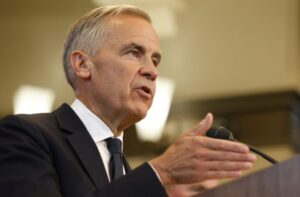
Prime Minister Mark Carney speaks at a press conference in Mississauga on Friday, Sept. 5, 2025.
Canada to stall electric vehicle rules as Carney seeks to boost auto sector
Prime Minister Mark Carney speaks to the media, at the Liberal Cabinet Retreat, in Toronto, Wednesday, Sept. 3, 2025.
Poilievre accuses PM of flip-flopping on gas, diesel car ban
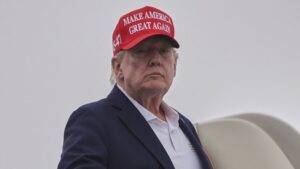
The filings provide no detail on who purchased the credits and what countries they come from, but U.S. President Donald Trump eliminated America’s EV mandate program on his first day of office.
“We’ve seen over $40 billion in new investment into Canada since 2020 and all signs were pointing to the automotive industry thriving,” Kingston said.
“Now the federal government has regulations that specifically punishes companies that have a footprint here, requiring them to purchase credits from a company that has a minimal (Canadian) footprint and an almost nonexistent employee base. Why on earth would you do that, particularly in an environment where companies are already facing enormous economic pressure from tariffs?”
As well, carmakers contacted by the Sun declined to comment on how much money — if any — they’ve paid to Tesla for credits, but industry and government sources tell the Sun it’s definitely happening.
While the CVMA praised Prime Minister Mark Carney — himself a Tesla shareholder — earlier this week for pausing the unpopular Trudeau-era mandates while the government conducts a review, he said the program needs to be scrapped entirely.
“There’s been a recognition that we need to protect this sector and find a way to get rid of tariffs, ensure this footprint remains, and Canadian jobs are created by the automotive sector,” Kingston said.
“Why would you do something that puts Canadian companies with Canadian footprints at a disadvantage to companies that don’t invest in this country?
“It doesn’t make sense. It never made sense.”